AGENTIC AI · IOT PRODUCT & MOBILE APP · 2026
MiCa.
An IoT hospitality companion that rebuilds trust and place attachment between guests and hosts on short-term rental platforms. Master's project on the topic of "Future of Hospitality"
- Role
- UX Designer
- Team
- Gianina Bravo, Giada Ceccolini, Jeaninne Pfannl, Emma Scarlatti
- Year
- 2026
- Location
- Milan, IT
- Prototype
- Open in Figma
Overview
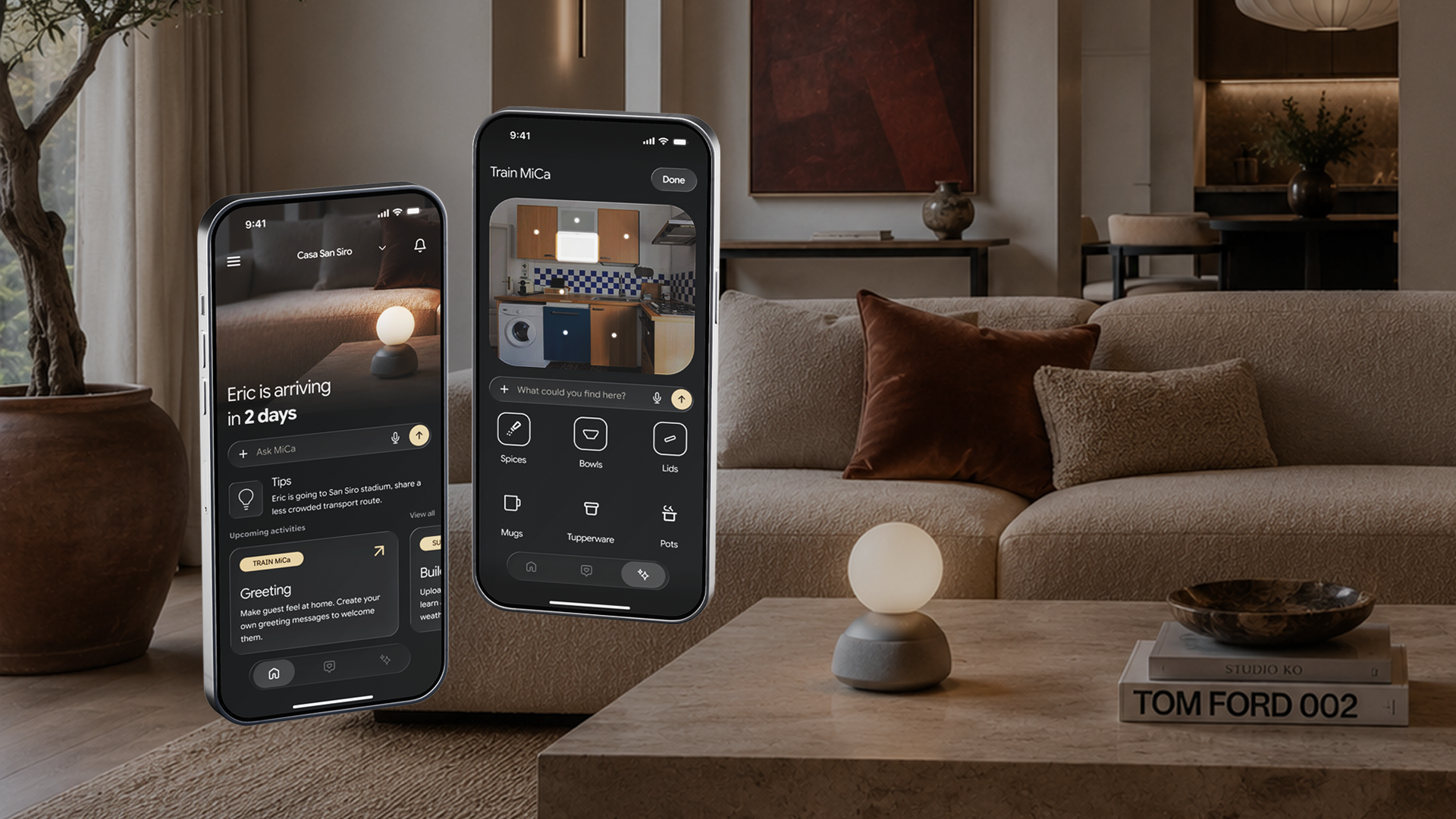
I worked among a team of 2 designers, 1 strategist, and 2 researchers at UXP Master's. We developed MiCa, an IoT hospitality companion designed to redefine the interaction between guests and hosts on short-term rental platforms. Our project addresses the lack of emotional connection and trust in these environments, where guests often view homes as temporary commodities and hosts struggle with the exhaustion of non-professional management. By creating a digital extension of the host, we aim to foster 'place attachment' through meaningful, AI-supported interactions, encouraging guests to value and respect the space as if it were a home rather than a simple product.
Step 01
Research and Problem Identification
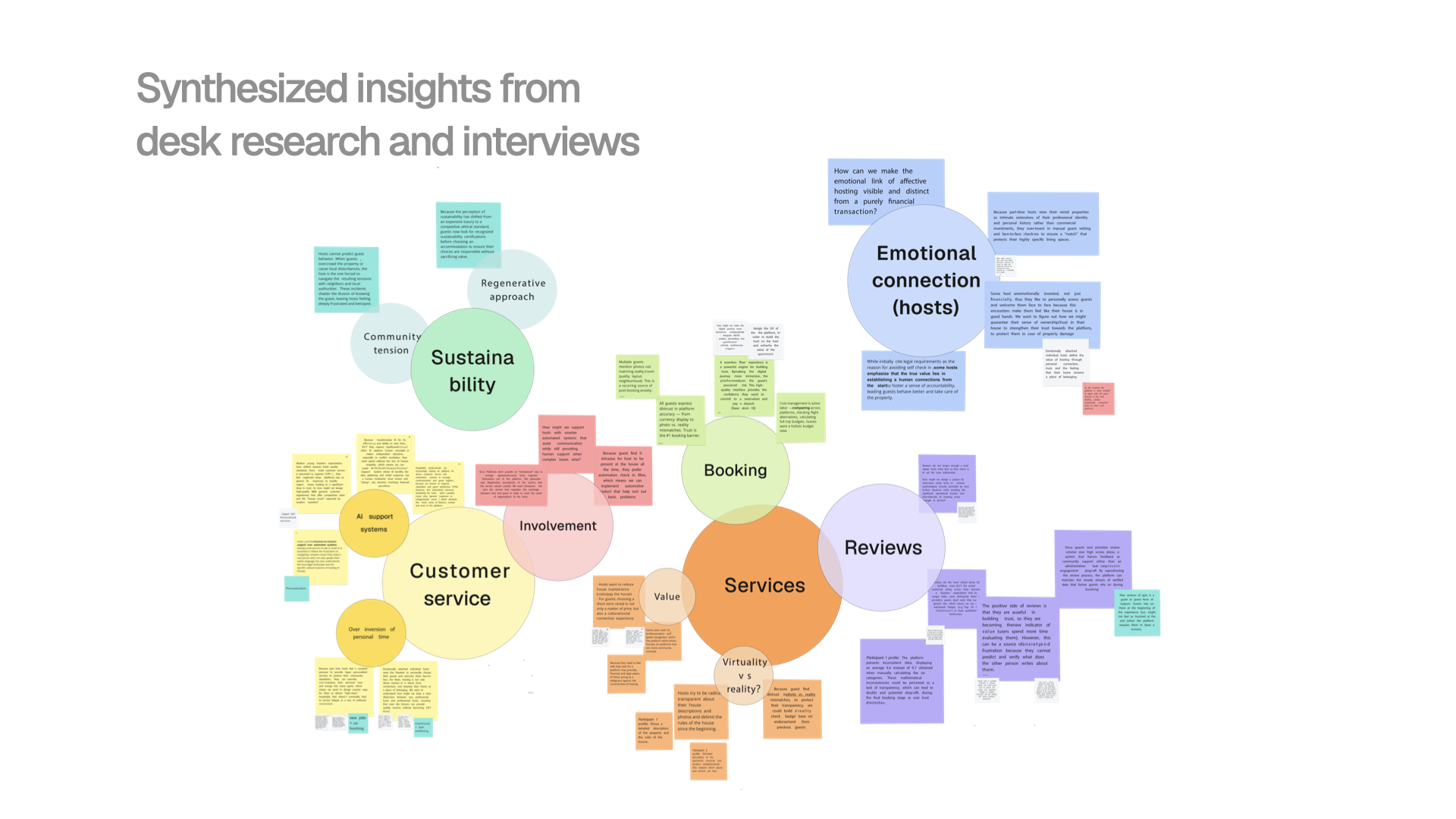
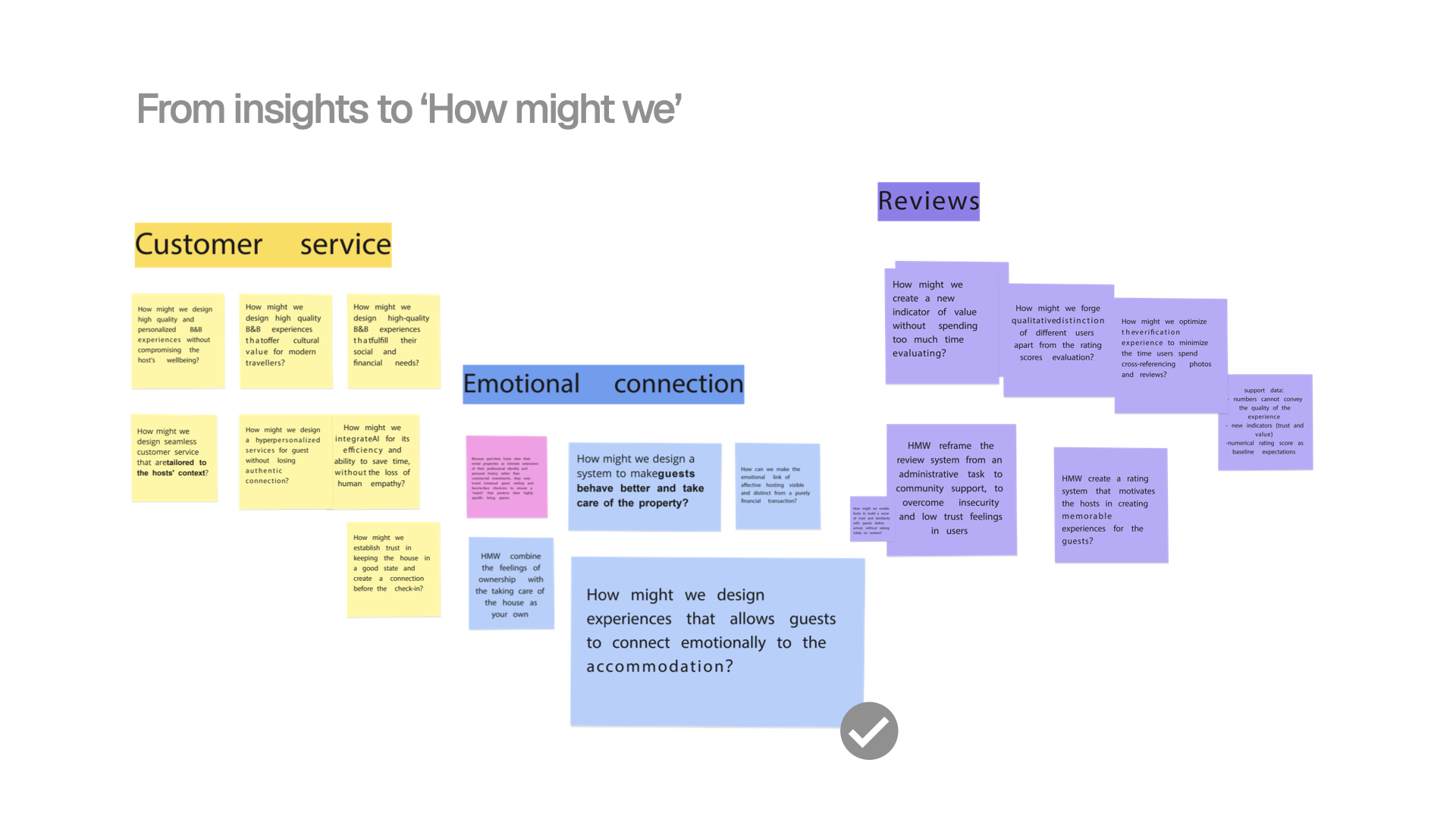
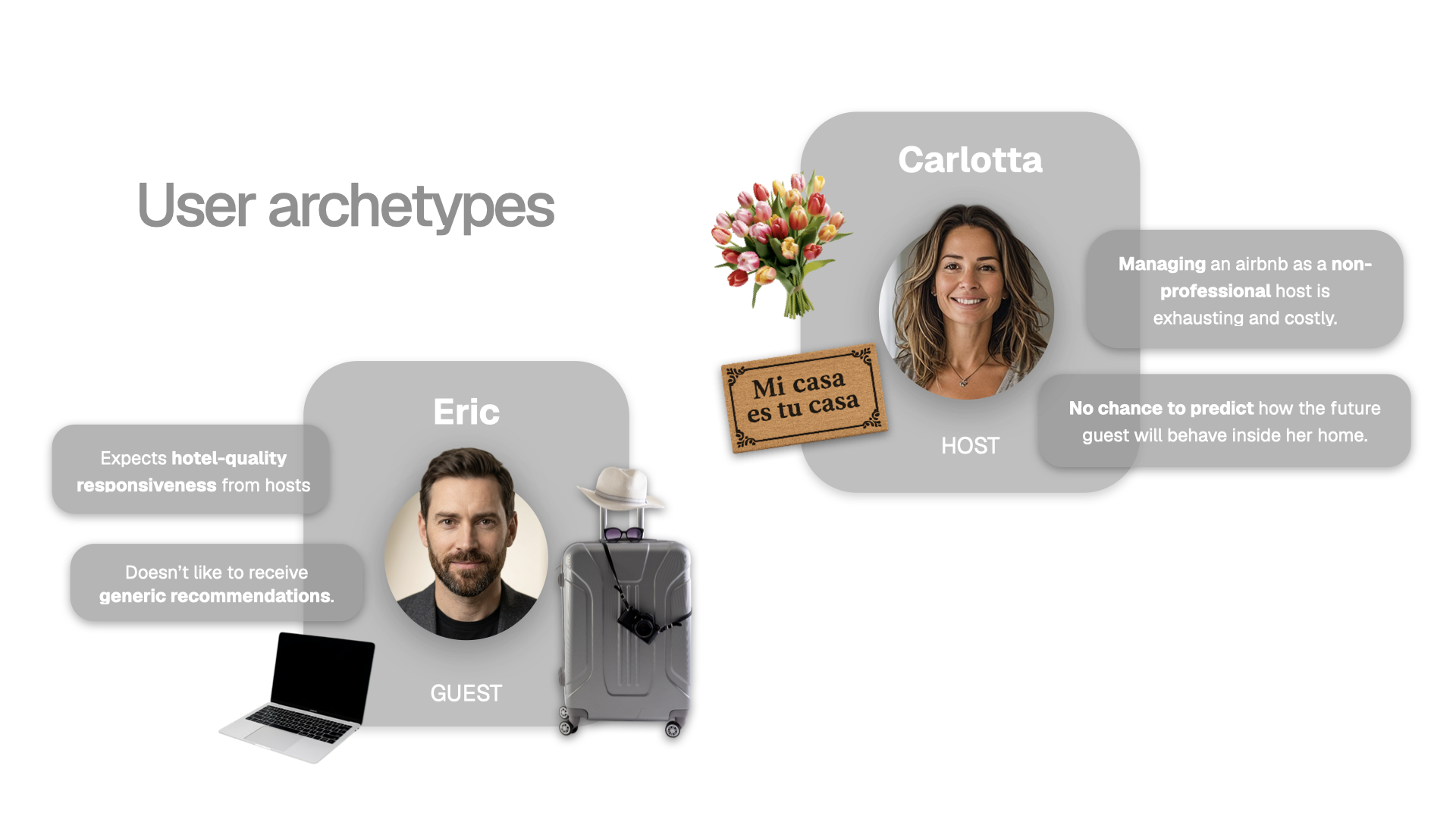
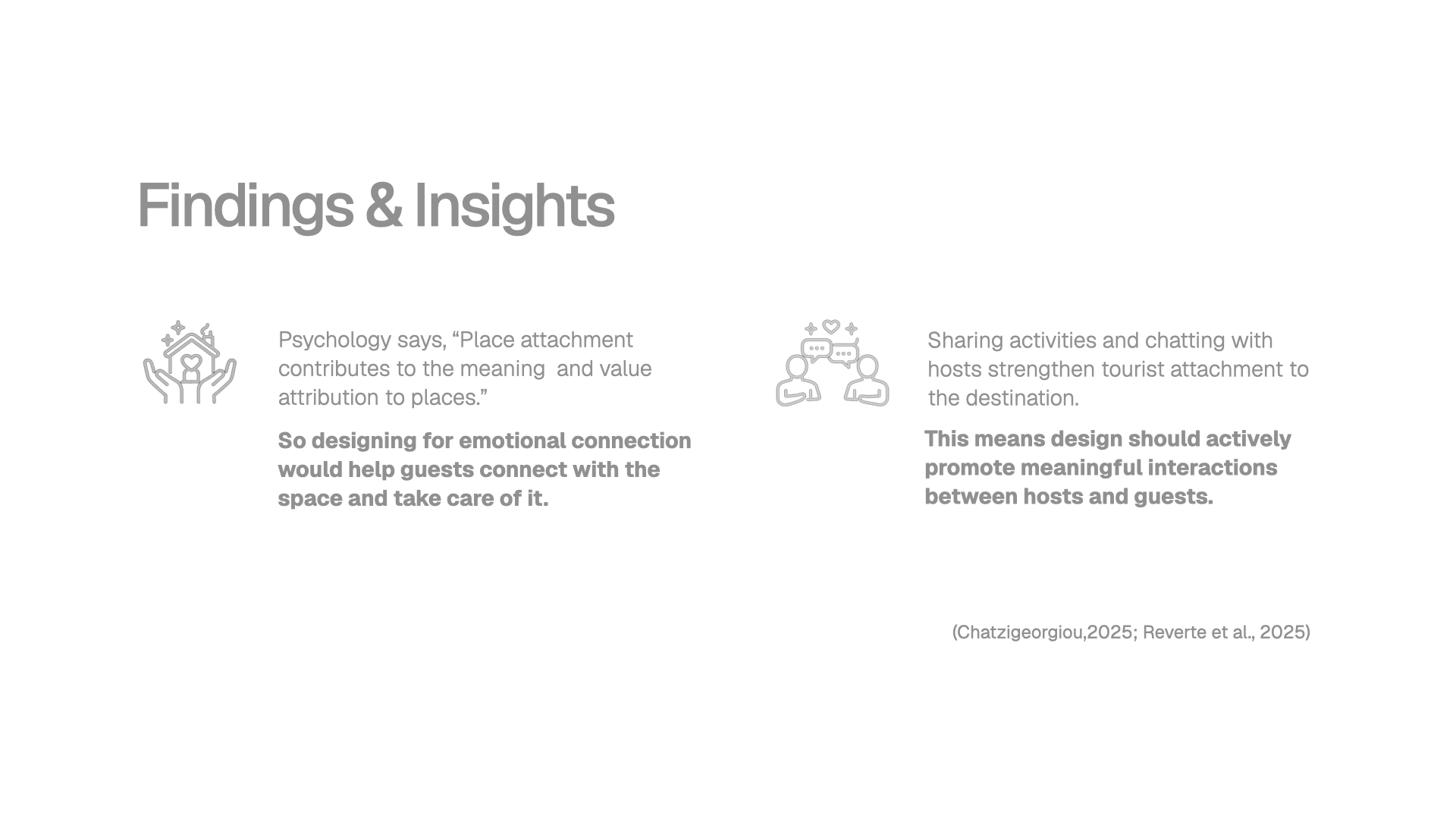
We began by asking how trust is constructed and value is perceived during guest-host interactions. From the guest side, users like 'Eric' dislike generic recommendations and expect hotel-quality responsiveness from hosts. From the host side, non-professional hosts like 'Carlotta' find management exhausting and costly, with no way to predict how future guests will behave. The core insight: psychological research shows that place attachment — built through chatting and shared activities — contributes to the meaning guests attribute to a space. Designing for emotional connection helps guests care for the property.
The Problem
The Problem: Airbnb Hosts Are Overwhelmed
1. The Host Struggle
Managing guest communications, check-ins, local recommendations, and property issues across time zones is exhausting — and costly. Many European hosts juggle multiple listings with little to no professional support.
2. The Guest Gap
Guests expect hotel-quality responsiveness from individual hosts. Language barriers, unfamiliar neighborhoods, and delayed replies create friction that leads to poor reviews and lost revenue.
Step 02
Conceptualizing the Solution: MiCa
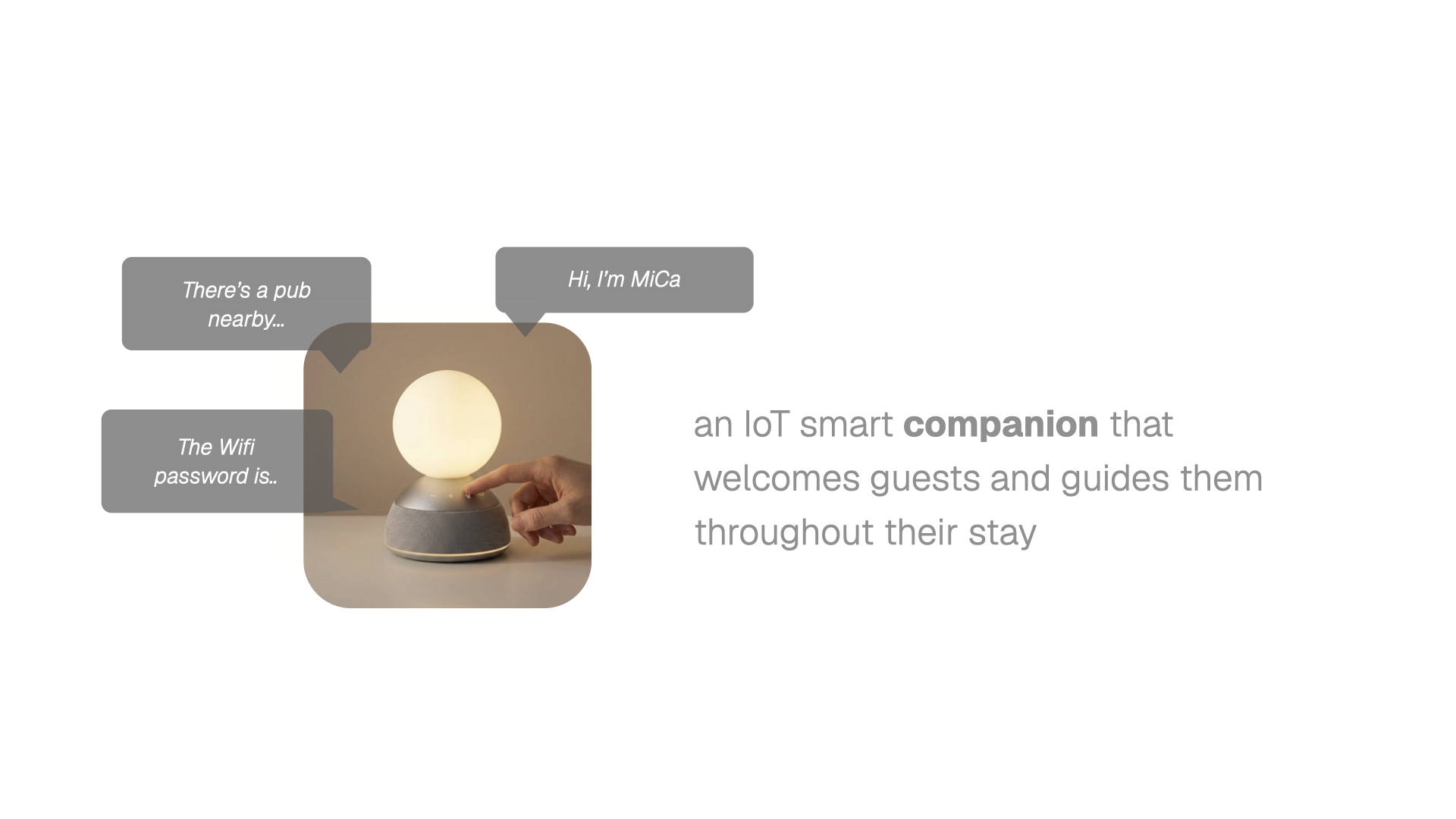
We developed MiCa, an IoT system that welcomes and guides guests throughout their stay. It acts as a digital co-host, supporting the guest while the actual host remains behind the scenes. MiCa provides essential information — Wi-Fi passwords, local pub recommendations, house rules — in a way that feels personal rather than automated.
How it works
The MiCa Experience, Step by Step
01
Arrival
Guest activates MiCa with a wake word.
02
Welcome
MiCa greets the guest in their preferred language.
03
Stay Support
Guest asks questions and makes requests.
04
Checkout
Host receives a summary and feedback report.
MiCa integrates into every stage of the guest stay — from the first hello at check-in to a personalized farewell at checkout — with no real-time action required from the host.
Core features
What MiCa Can Do
Smart Check-In Guide
MiCa walks guests through Wi-Fi passwords, appliance instructions, house rules, and emergency contacts — reducing host message volume by up to 70%.
Hyper-Local Recommendations
Curated suggestions for restaurants, supermarkets, transport, and cultural experiences — updated regularly and tailored to guest preferences.
Issue Escalation
When a guest reports a maintenance issue or emergency, MiCa alerts the host with context, priority level, and suggested resolution steps.
Object Guidance
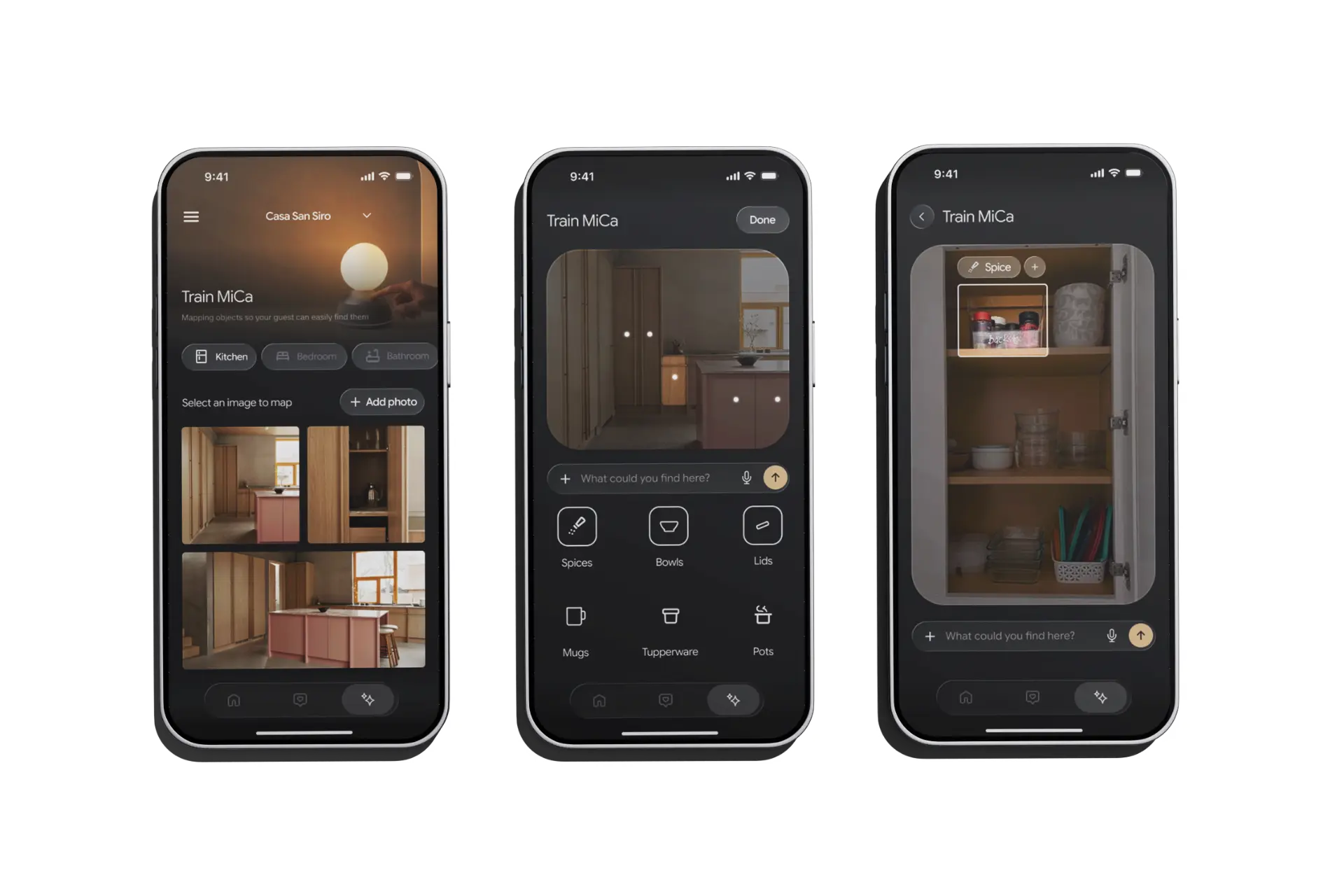
Hosts train MiCa on where items live in the home so guests can be directed to what they need instantly.
Step 03
Prototyping the MiCa System
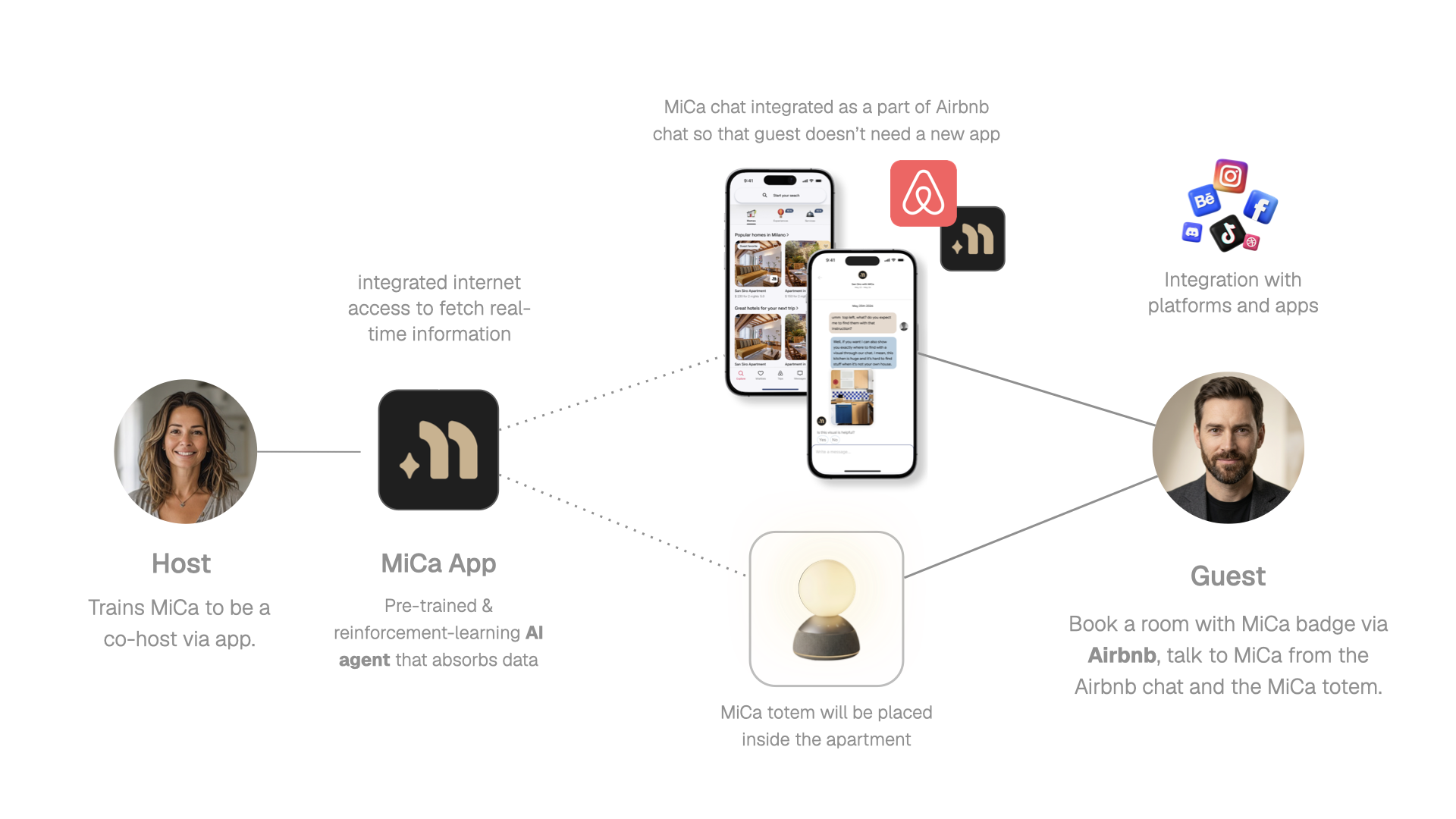
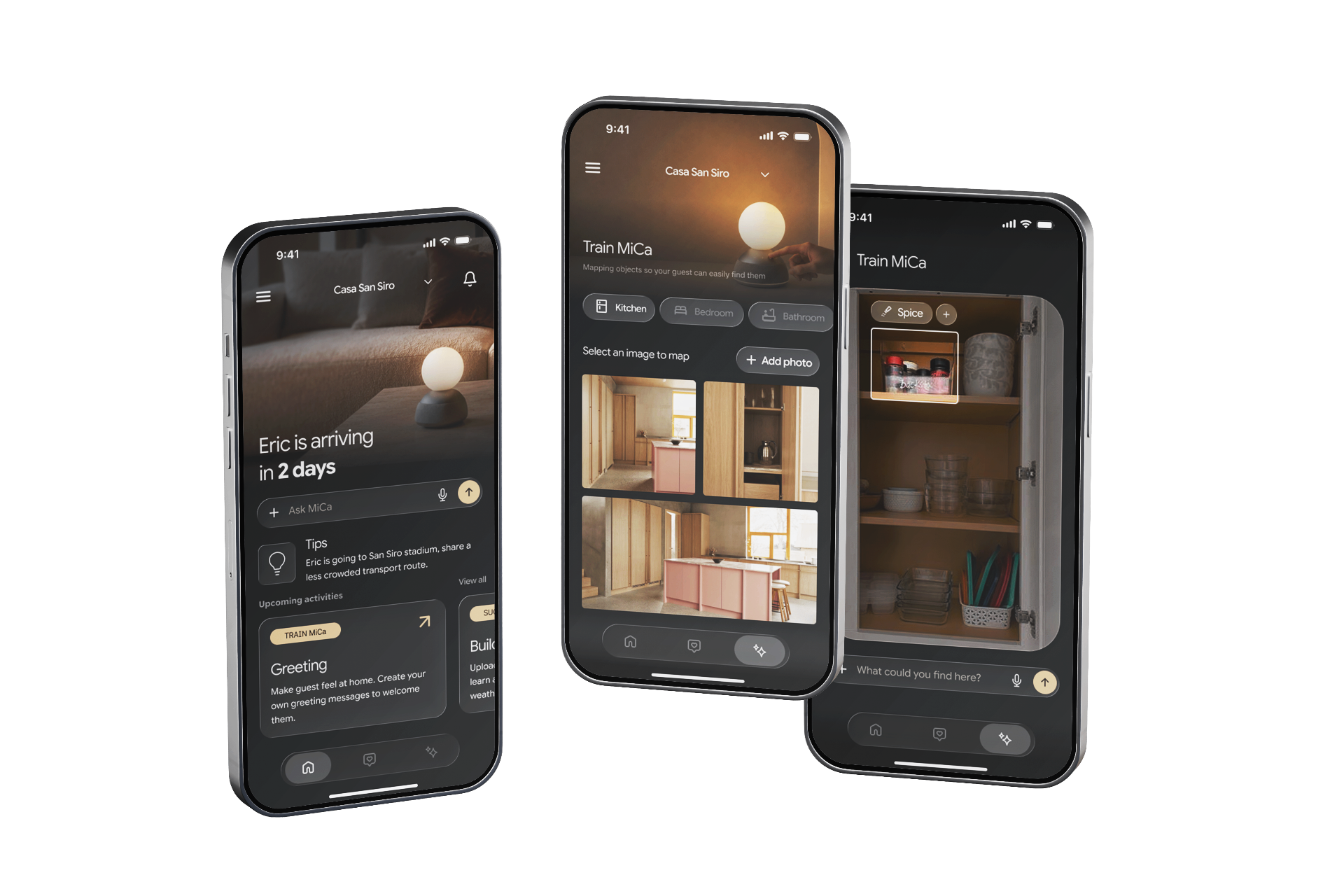
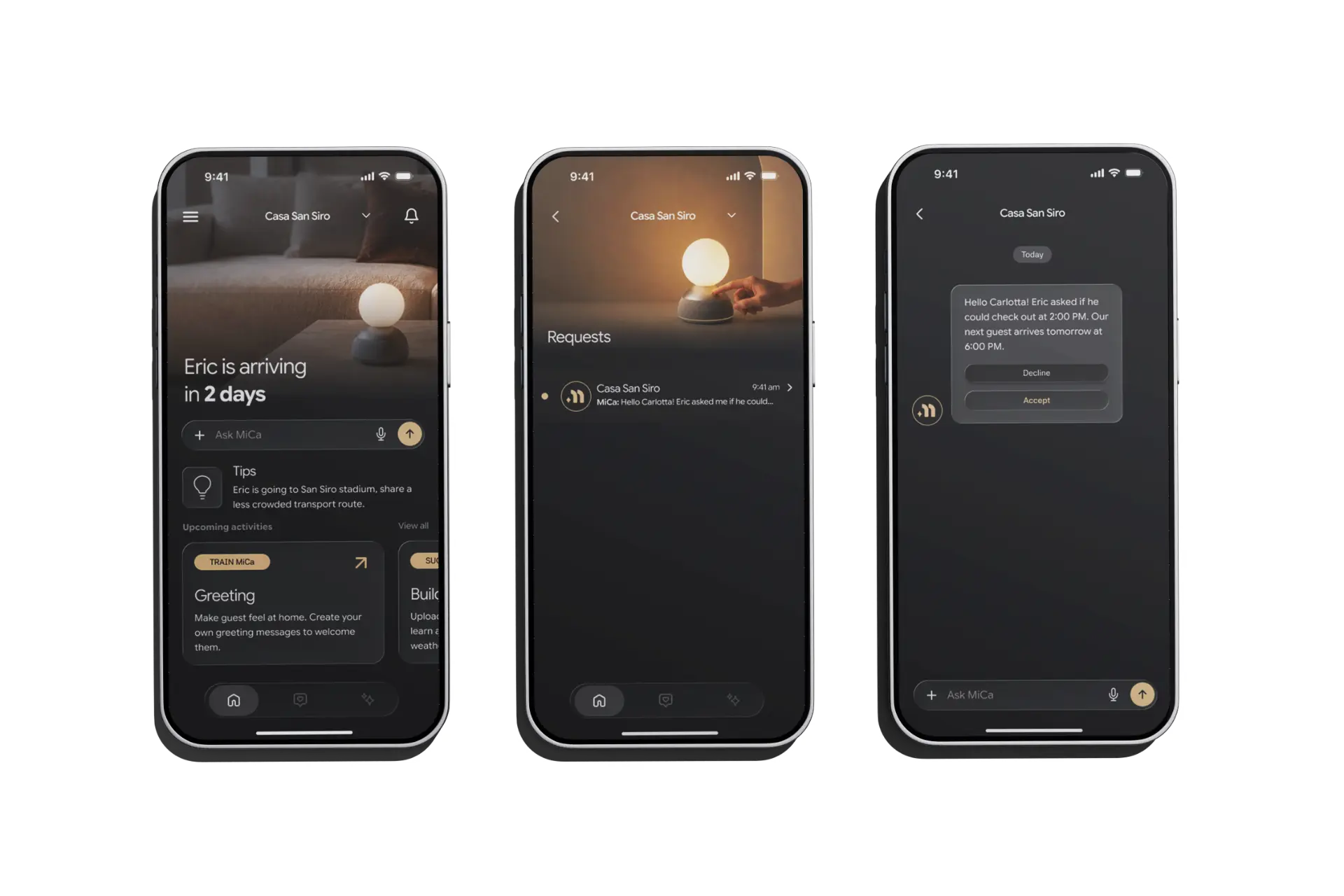
Our solution consists of two primary components. The MiCa App lets hosts 'train' their AI co-host using reinforcement learning and handles the administrative side — check-out checklists, booking management through platforms like Airbnb. The MiCa Totem is a physical IoT device in the apartment that gives guests context-aware recommendations and instructions. See the video below that demonstrates how MiCa works in Airbnb home.
Step 04
Evaluation and Findings
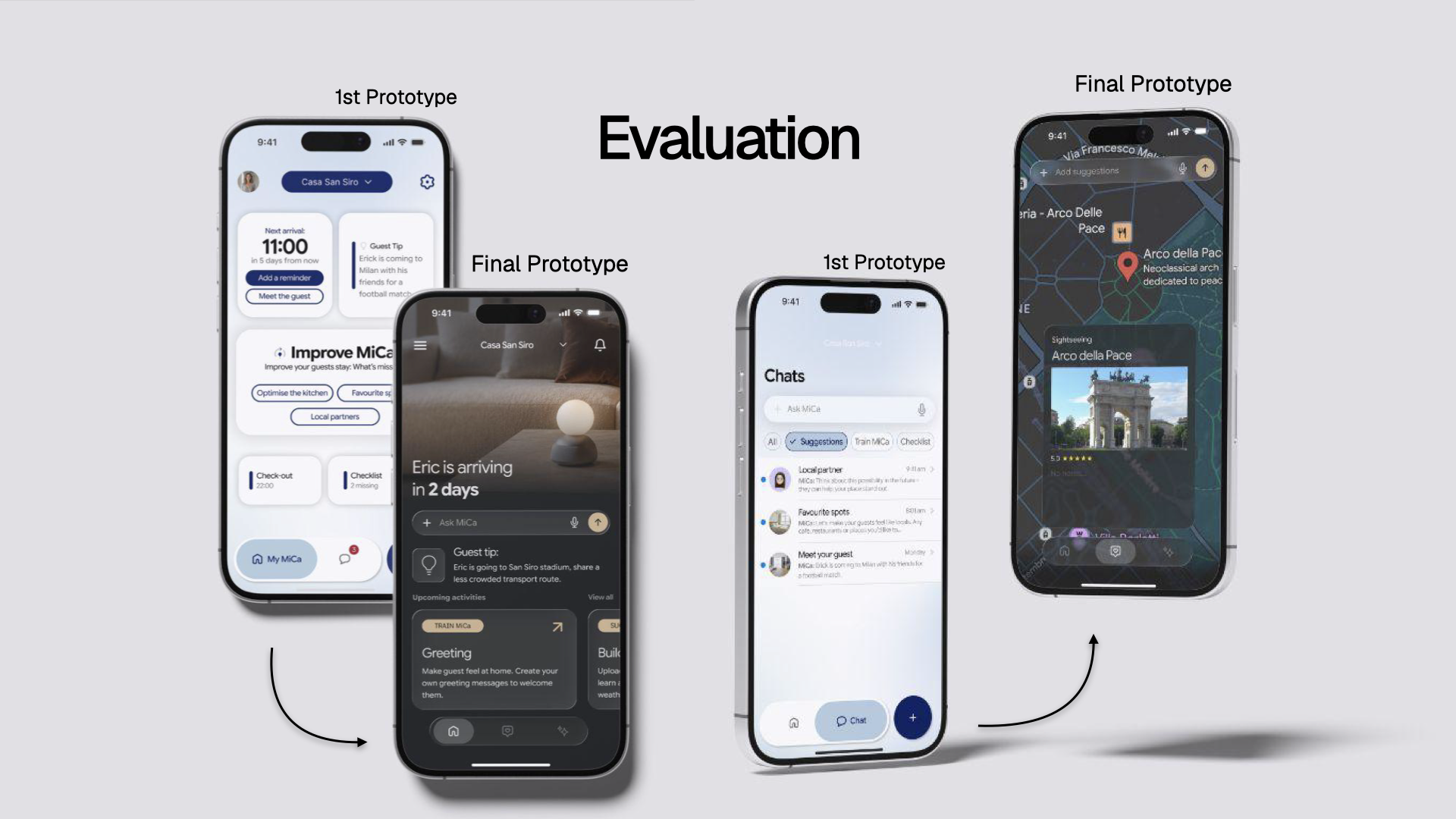
We refined the prototype based on specific interaction goals. The first prototype underwent a peer review using the think-aloud technique. We identified several navigation issues, and found that limiting interaction with the AI to chat alone may not help users engage effectively with the product. The final UI was updated to convey a calm, premium look. We shifted from training the host AI, MiCa, entirely through chat to enabling interaction through a map that recommends spots for guests and maps objects within the house.
Step 05
Future Directions
We established a roadmap for further technological integration. The next step is testing to measure how this emotional bond influences long-term guest satisfaction and engagement. We plan to include Tiny Machine Learning to enable presence-based automation, allowing the totem to enter an energy-saving 'sleep mode' when no one is around. Finally, we aim to create a MiCa-enabled network that connects with other automated home systems, such as lighting.
Challenges
The central challenge was designing trust without surveillance. A companion that speaks too often stops feeling like hospitality and starts feeling like monitoring. We had to balance proactive assistance with respect for the guest's sense of ownership over the space.
Outcome
A validated concept, an interactive Figma prototype, and a physical-plus-digital system presented as part of the MSc in UX Psychology at Politecnico di Milano and Università Cattolica del Sacro Cuore.
Reflection
MiCa reinforced that the best product decisions are often subtractive. The interface is a promise, and every extra interaction is a promise you have to keep. Designing for emotional connection is what turns a rental into a home.
Bibliography
Chatzigeorgiou, C., Christou, E., Simeli, I. (2025). From Brochures to Bytes: Destination Branding through Social, Mobile, and AI—A Systematic Narrative Review with Meta-Analysis. Administrative Sciences, 15(9), 1–57. https://doi.org/10.3390/admsci15090371
González-Reverté, Corrons & Gomis-López. (2025). Exploring the role of memorable tourism experience and place attachment in the revisit intention of tourists staying in short term rentals. Journal of Hospitality and Tourism Insights, 8(11), 79–99. https://doi.org/10.1108/JHTI-05-2024-0451
Next project