UX PSYCHOLOGY · NEWS VERIFIER MOBILE APP · 2026
Starfish.
A mobile news remixer that turns overwhelming feeds into trustworthy, bite-sized Starlists for Gen Z.
- Role
- UX/UI Designer
- Team
- Giordano Carmen, Rinaldo Simone, Komatina Jelisaveta, Valenzuela Valeria
- Year
- 2026
- Location
- Milan, IT
- Prototype
- Open in Figma
Overview
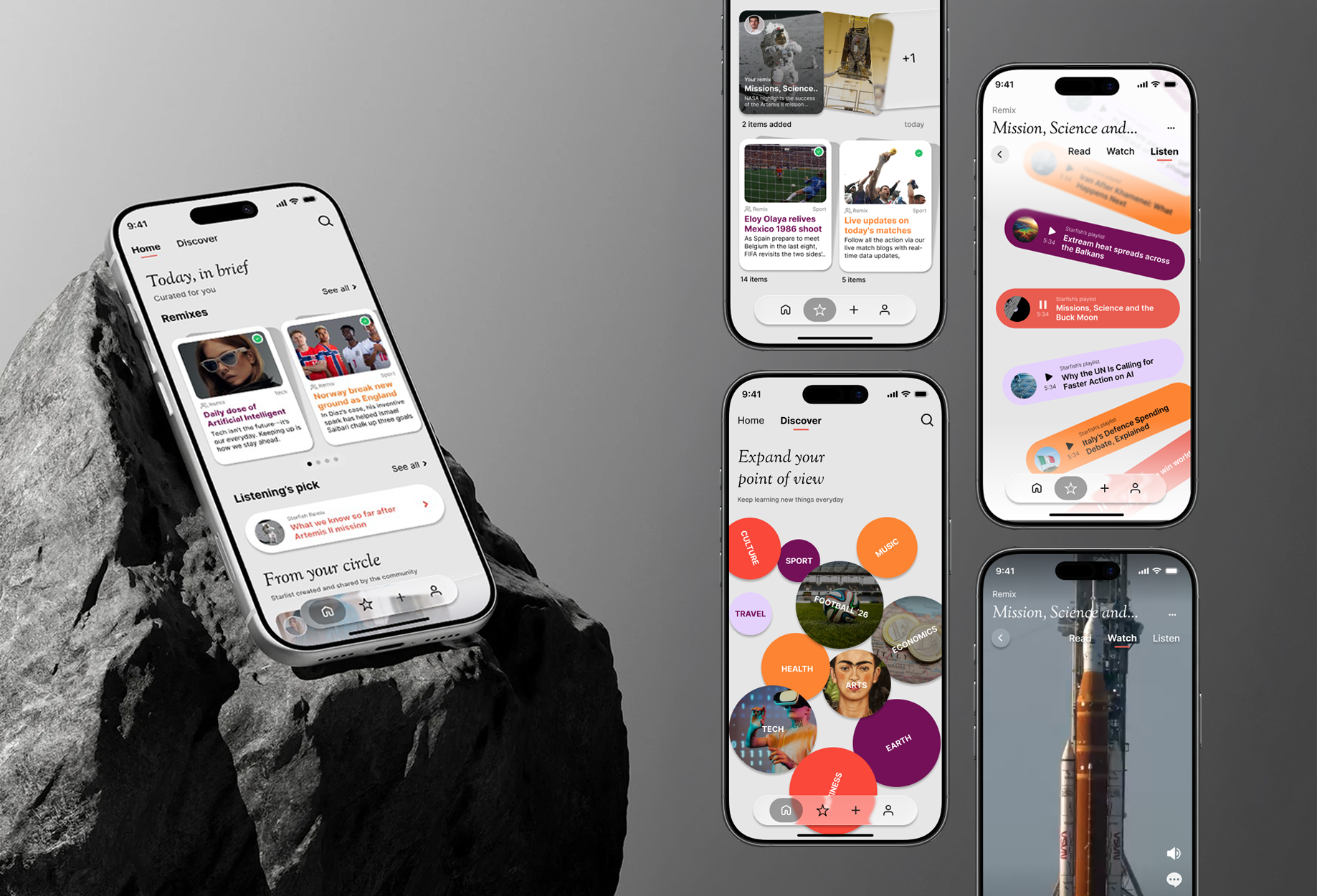
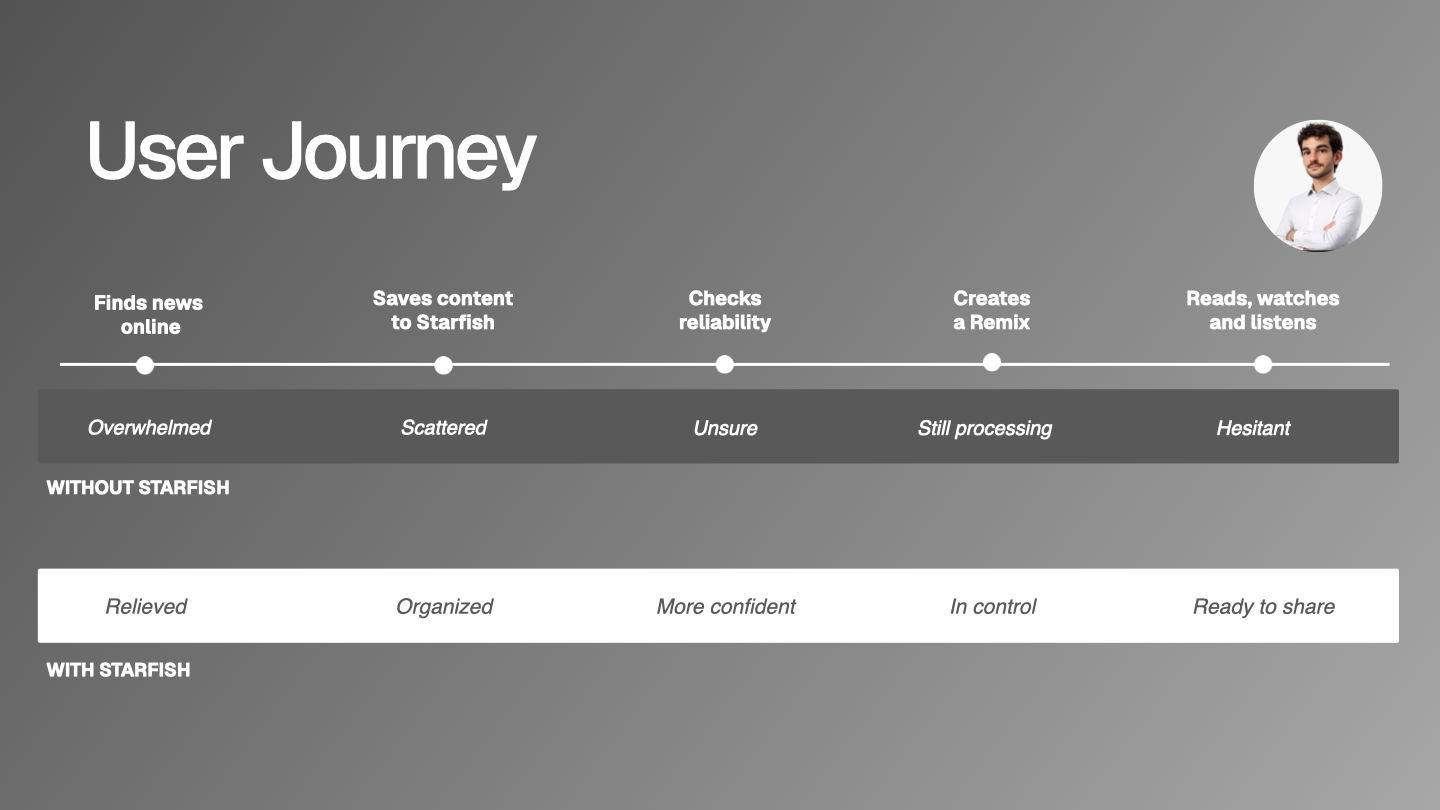
I collaborated in a team of 5 UXP students during a 2-week summer workshop. We created Starfish, a mobile 'news remixer' platform designed to empower Gen Z users in the AI era. Our project addresses the overwhelming nature of modern digital information by allowing users to save, verify, and remix news into bite-sized, trustworthy content. By transforming scattered information from social media and websites into customizable Starlists or Remixes — available as summaries, videos, or podcasts — we aim to turn passive, avoidant news consumption into an active, organized, and confident experience.
Step 01
Research and Key Insights
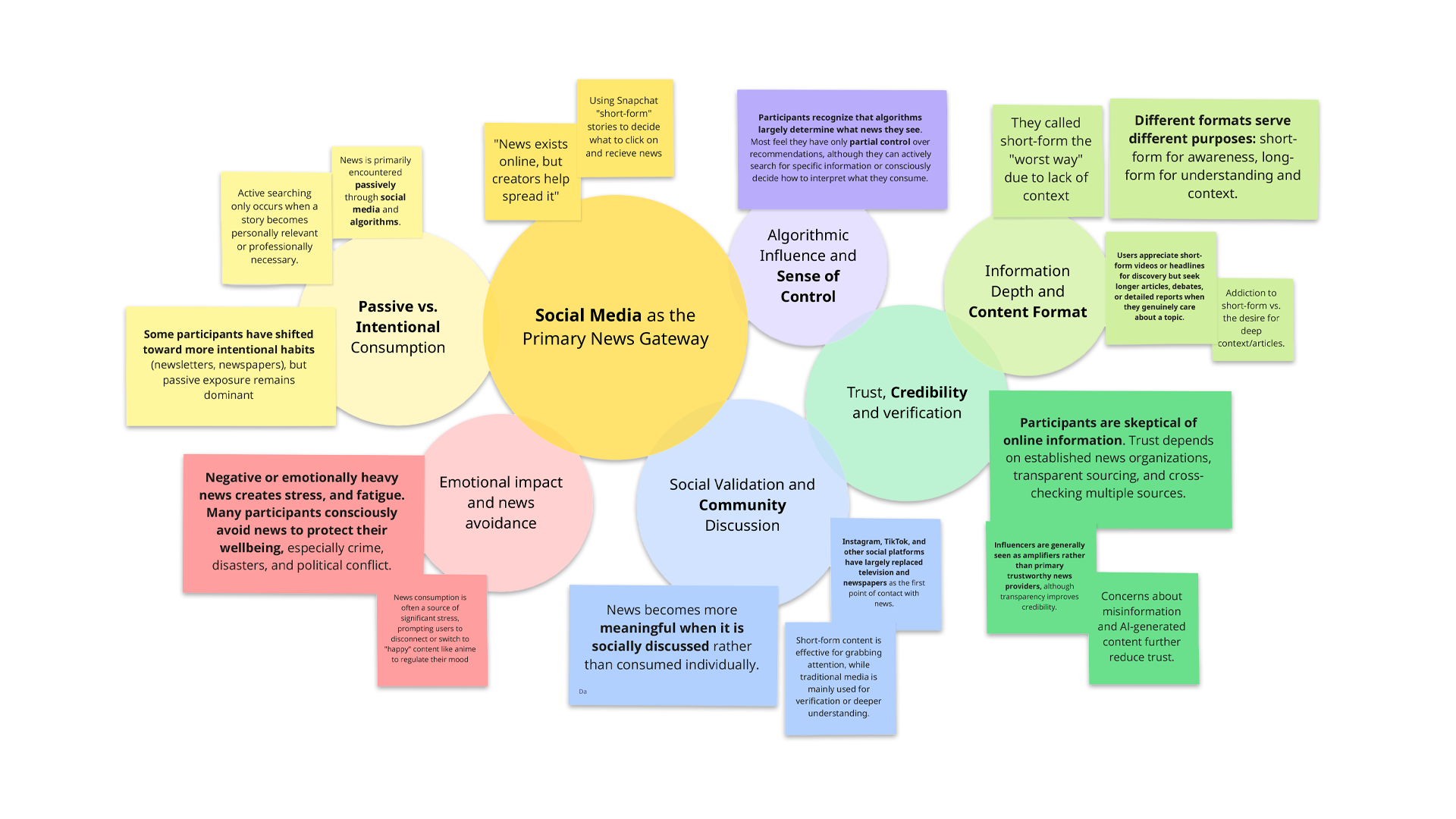
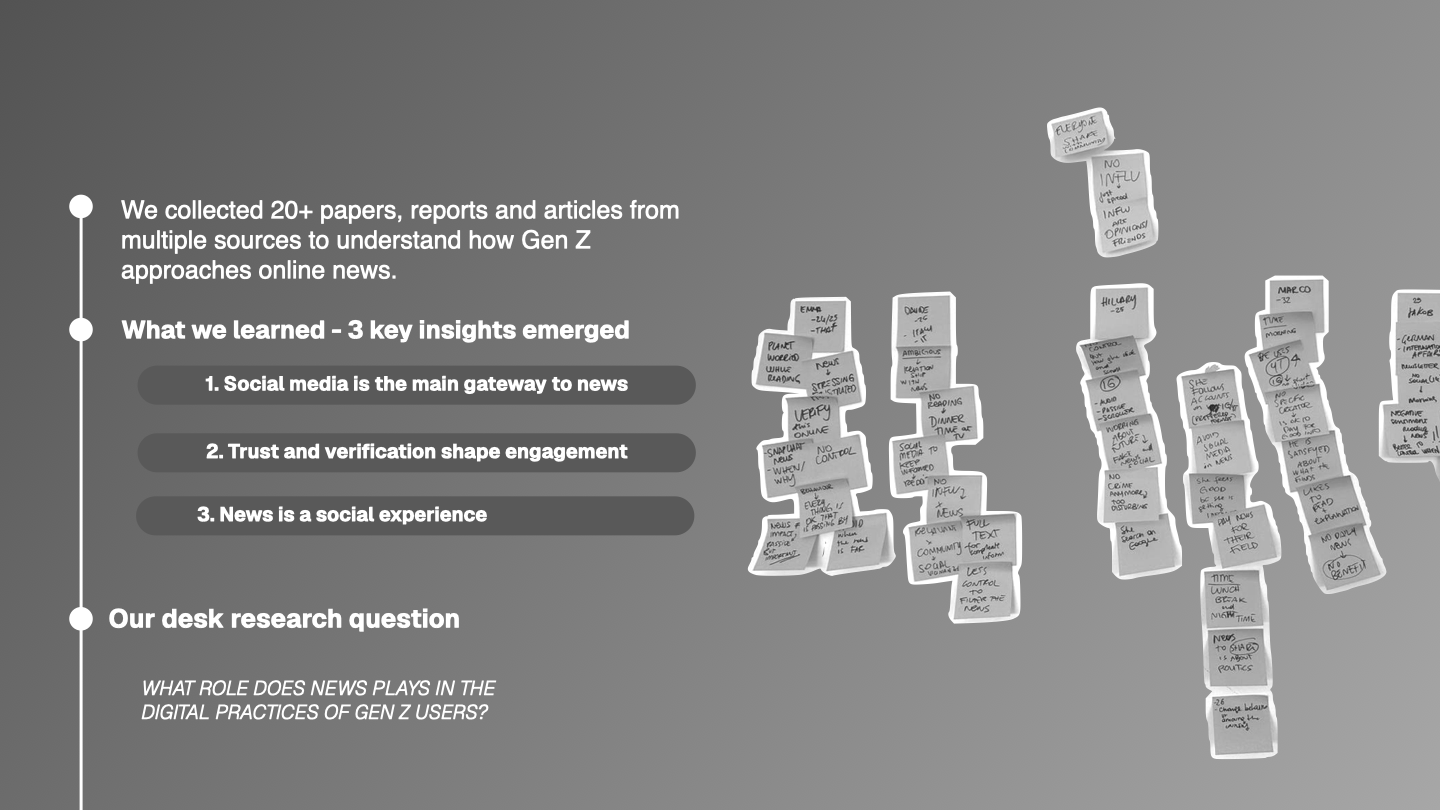
We began by analyzing over 20 papers, reports, and articles to understand how Gen Z interacts with online news. Three primary insights emerged: social media is the main gateway to news for young audiences; news is primarily a shared social experience; and engagement is heavily dictated by a user's ability to trust and verify information.
Step 02
User Analysis and Problem Identification
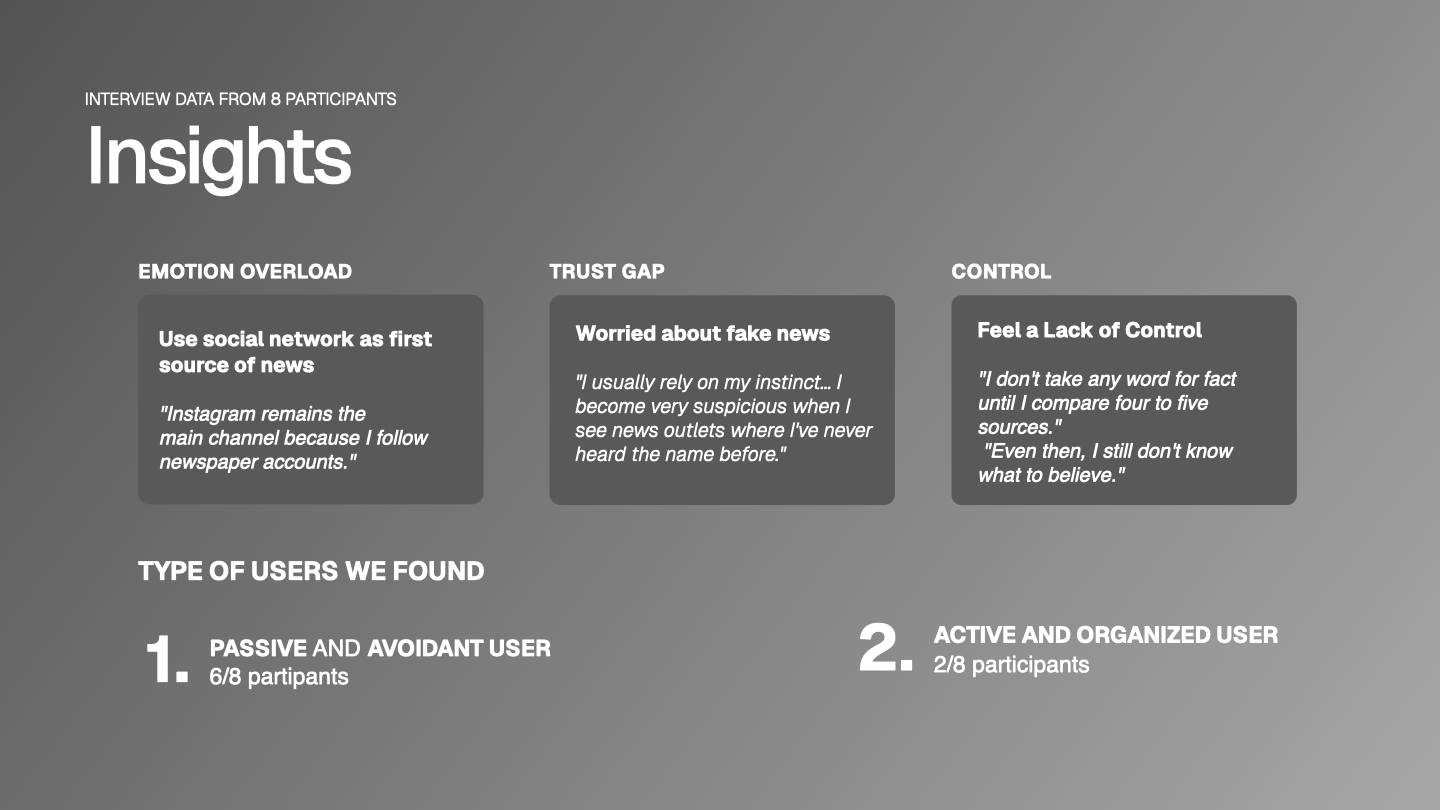
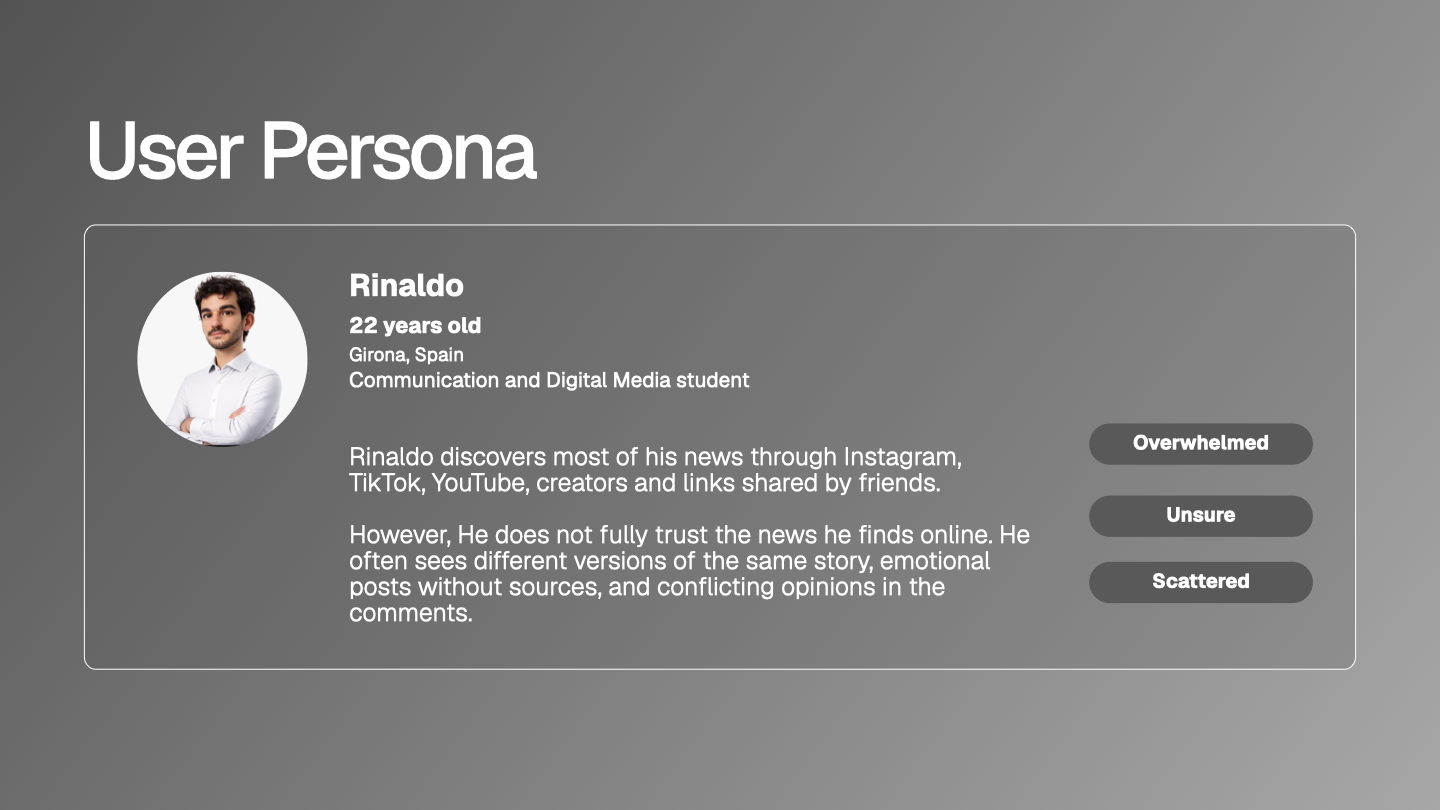
We interviewed eight Gen Z participants to dive deeper into their digital practices. Our findings highlighted a significant trust gap and emotional overload, with 6 out of 8 participants categorized as 'passive and avoidant' users who feel a lack of control over the news they encounter. To ground our design, we developed the persona of Rinaldo, a 22-year-old student who feels overwhelmed and unsure about the conflicting versions of stories he sees on platforms like TikTok and Instagram.
Step 03
Defining the Design Challenge
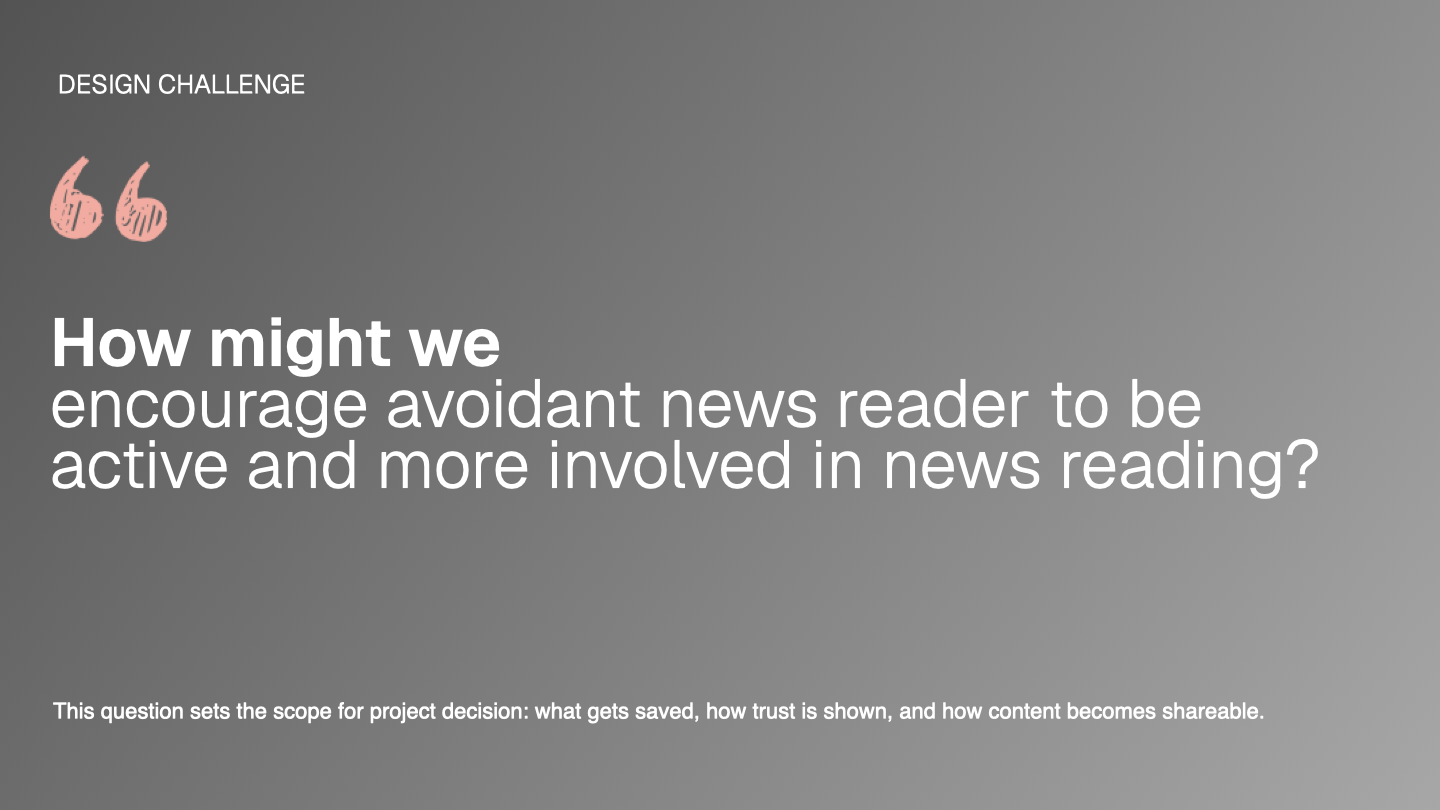
Based on our research, we formulated a core challenge: 'How might we encourage avoidant news users to get active and more involved in news reading?' This question guided our decisions on how content should be saved, how trust should be displayed, and how information could be shared effectively.
Step 04
Developing the Starfish Concept
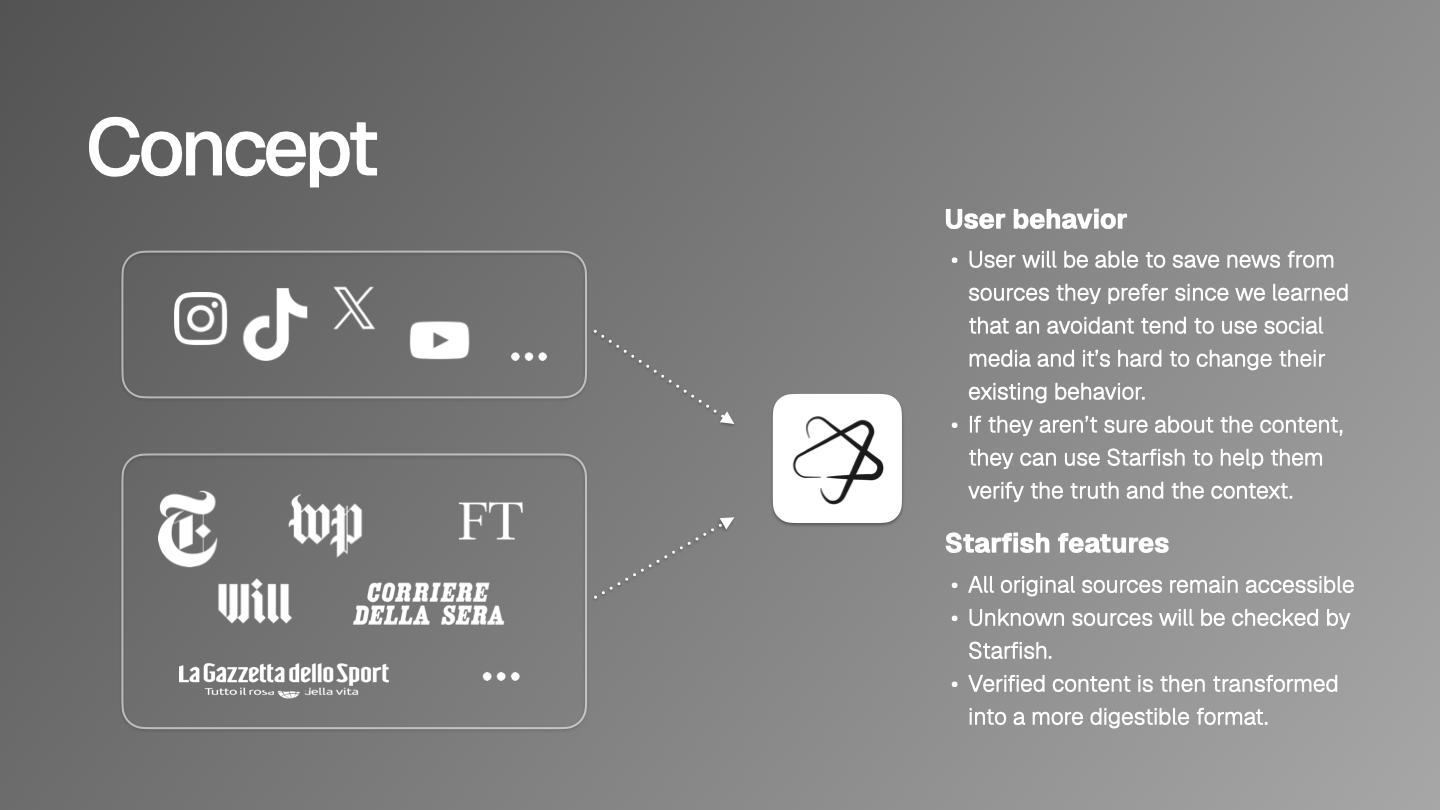
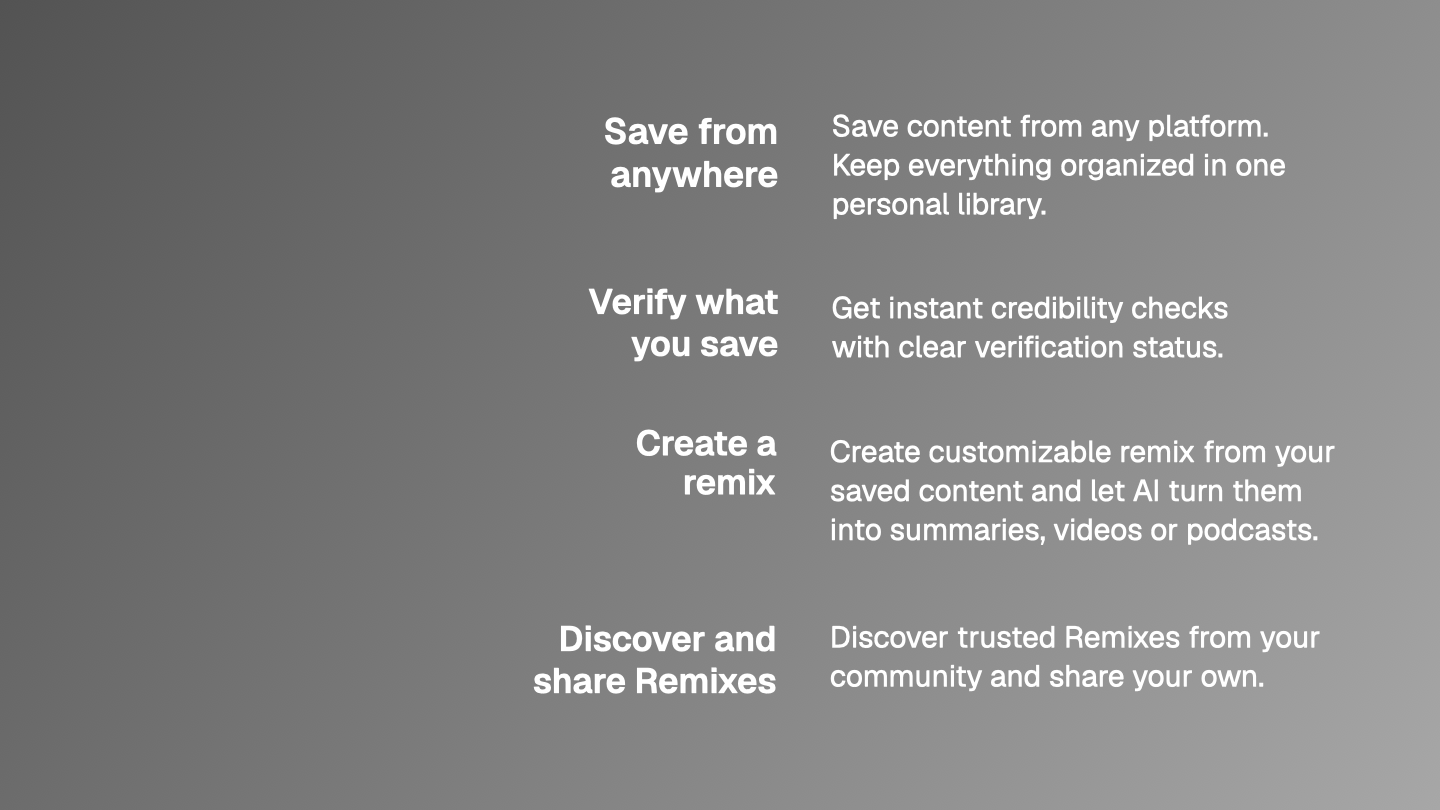
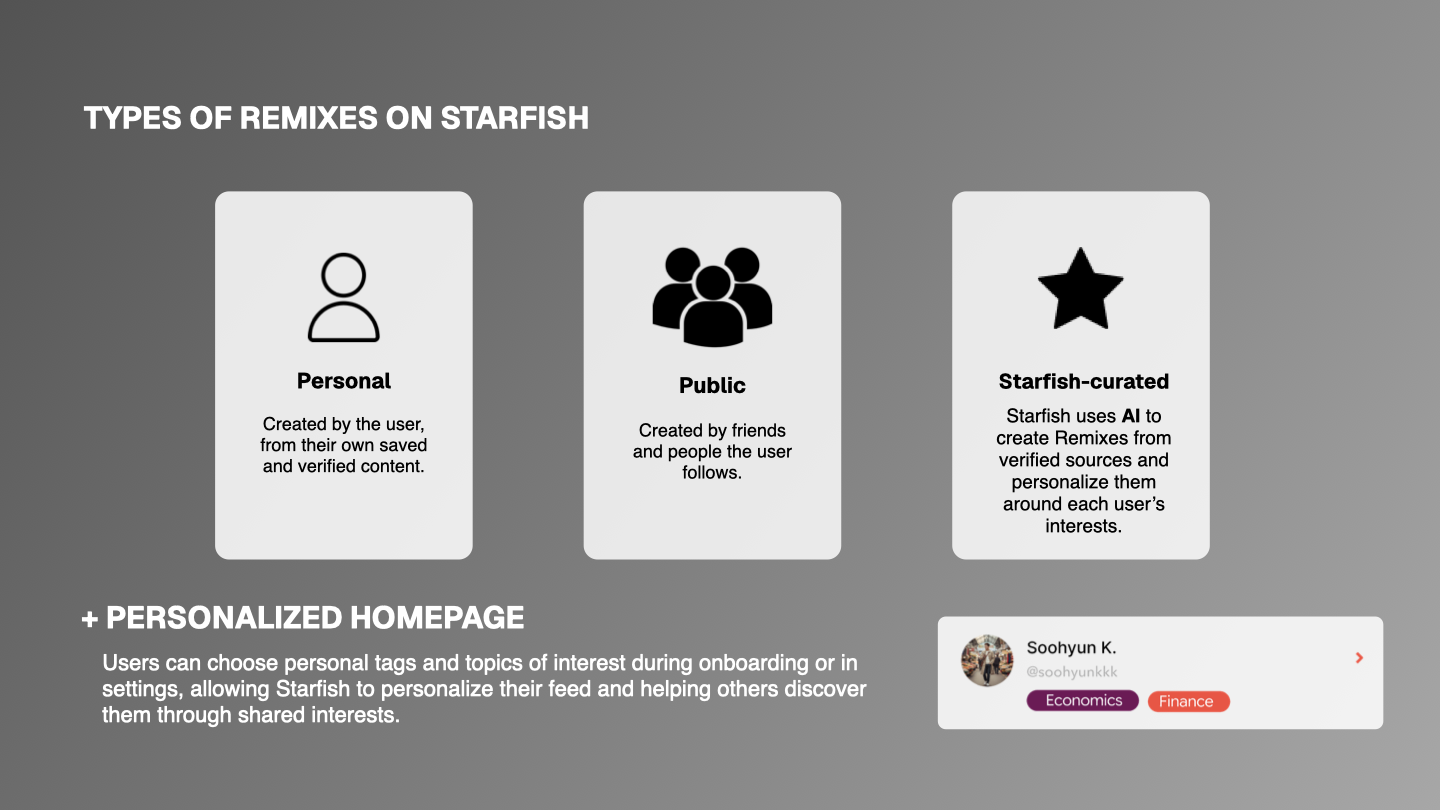
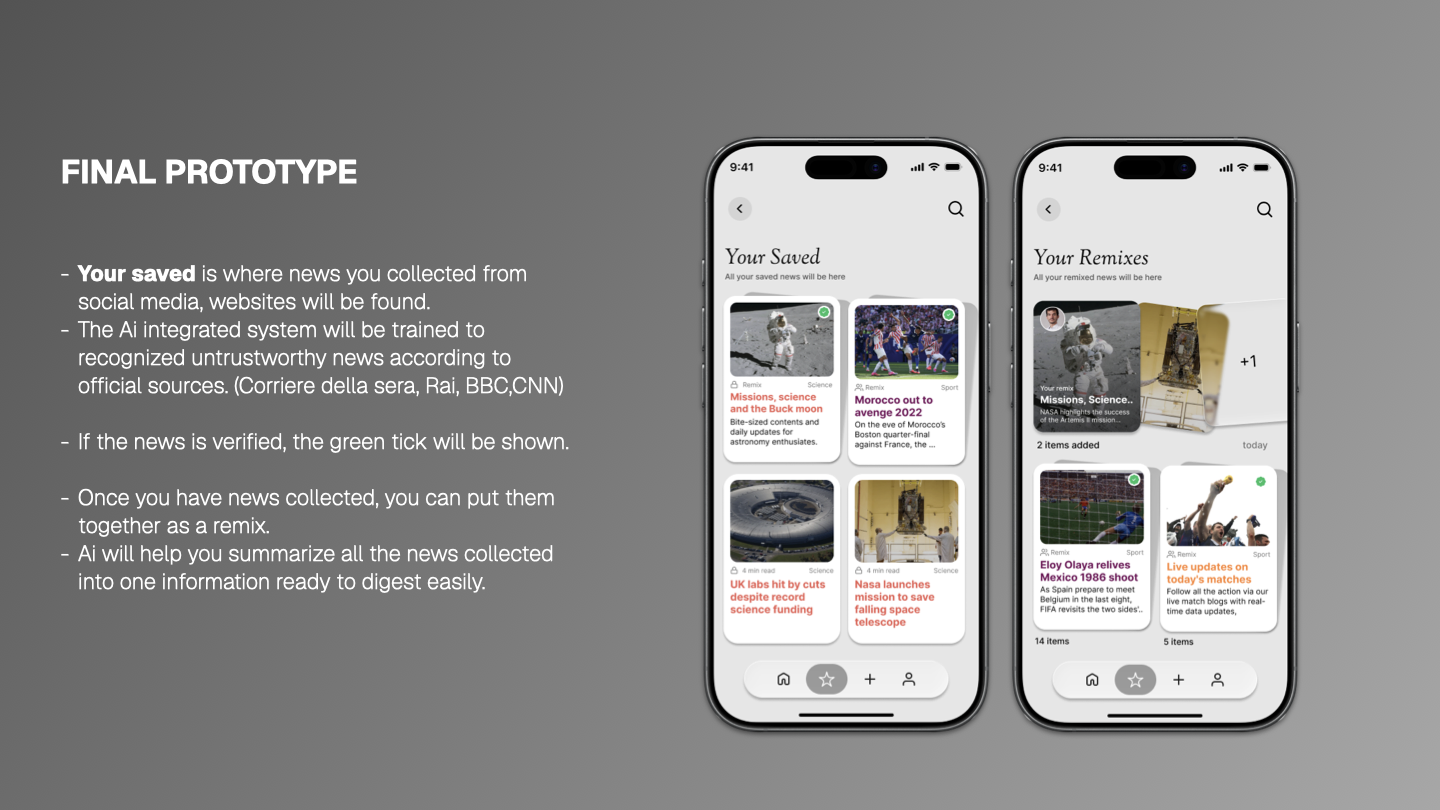
We designed Starfish around three main pillars. Save from anywhere: users can collect content from any platform into one personal library. AI-powered verification: the system automatically checks unknown sources against trusted outlets like the BBC or CNN and provides clear credibility statuses, such as a green checkmark for verified news. Remixing: verified content is transformed into digestible formats. These Remixes can be personal, shared by the community, or curated by AI based on user interests.
Step 05
Prototyping and Evaluation
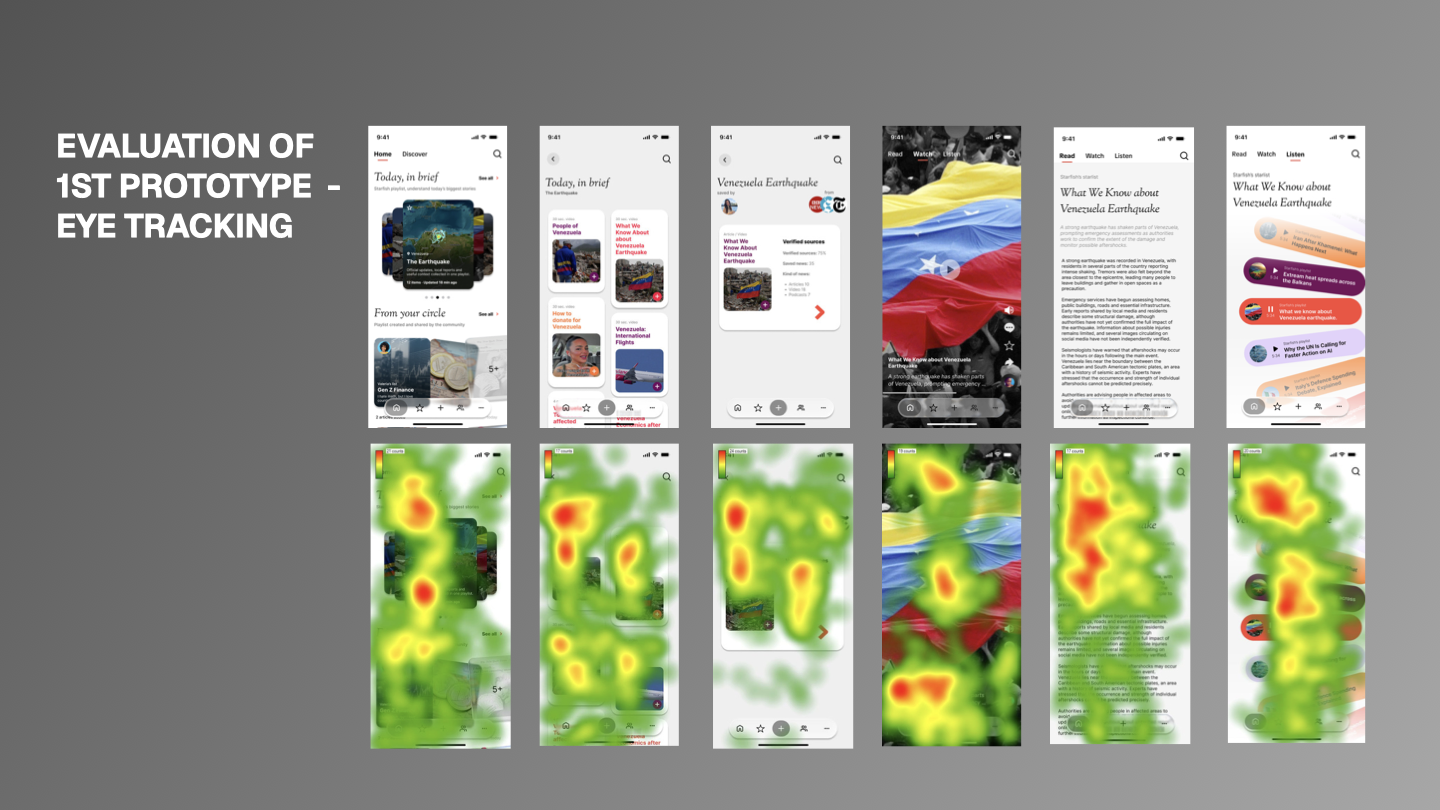
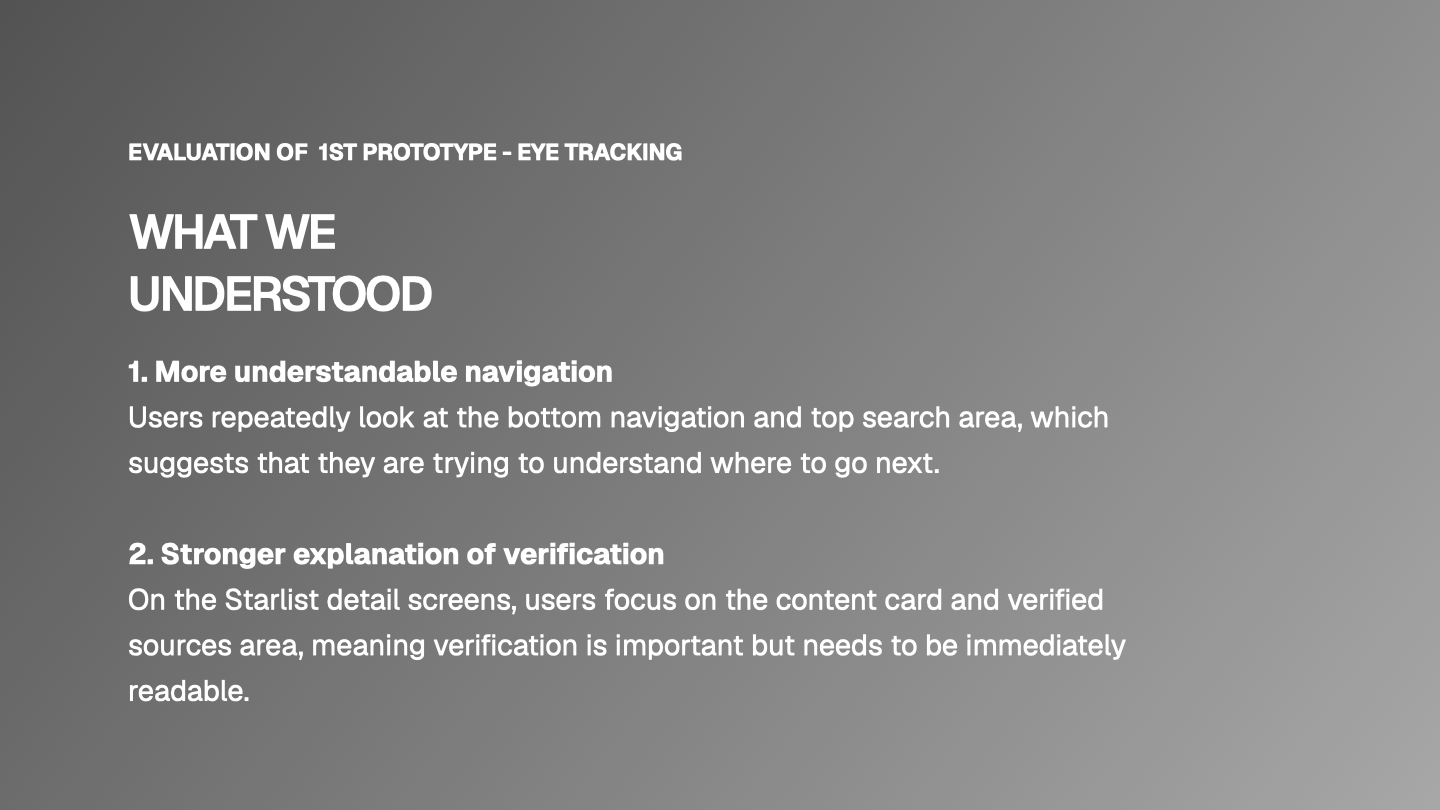
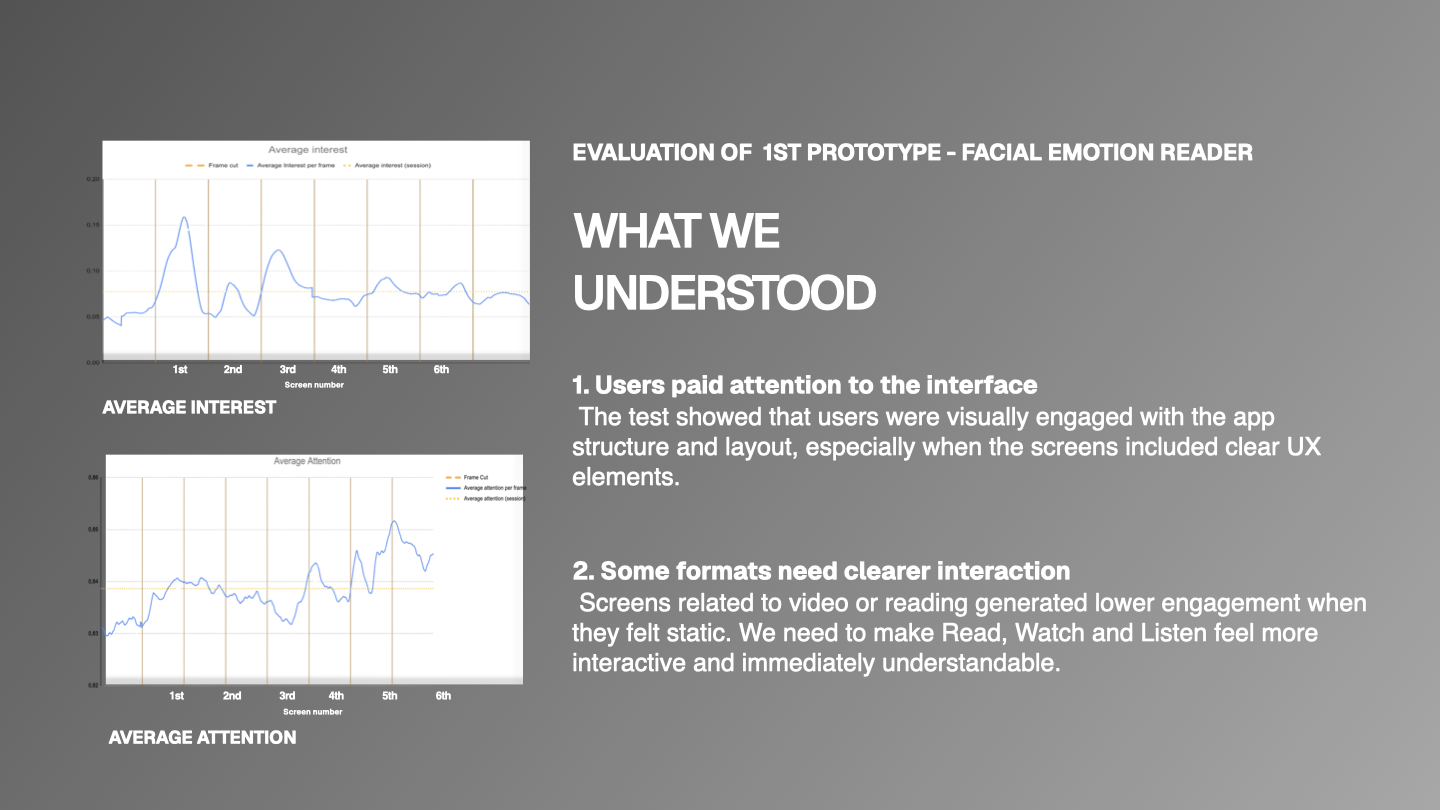
We built an initial prototype and evaluated it using eye-tracking technology and facial emotion readers. Users needed more intuitive navigation to understand where to go next. While users valued verification, we realized it needed to be even more immediately readable. And we found that static reading or video formats led to lower interest, signaling that we needed to make Read, Watch and Listen interactions more playful and dynamic.
Step 06
The Final Prototype
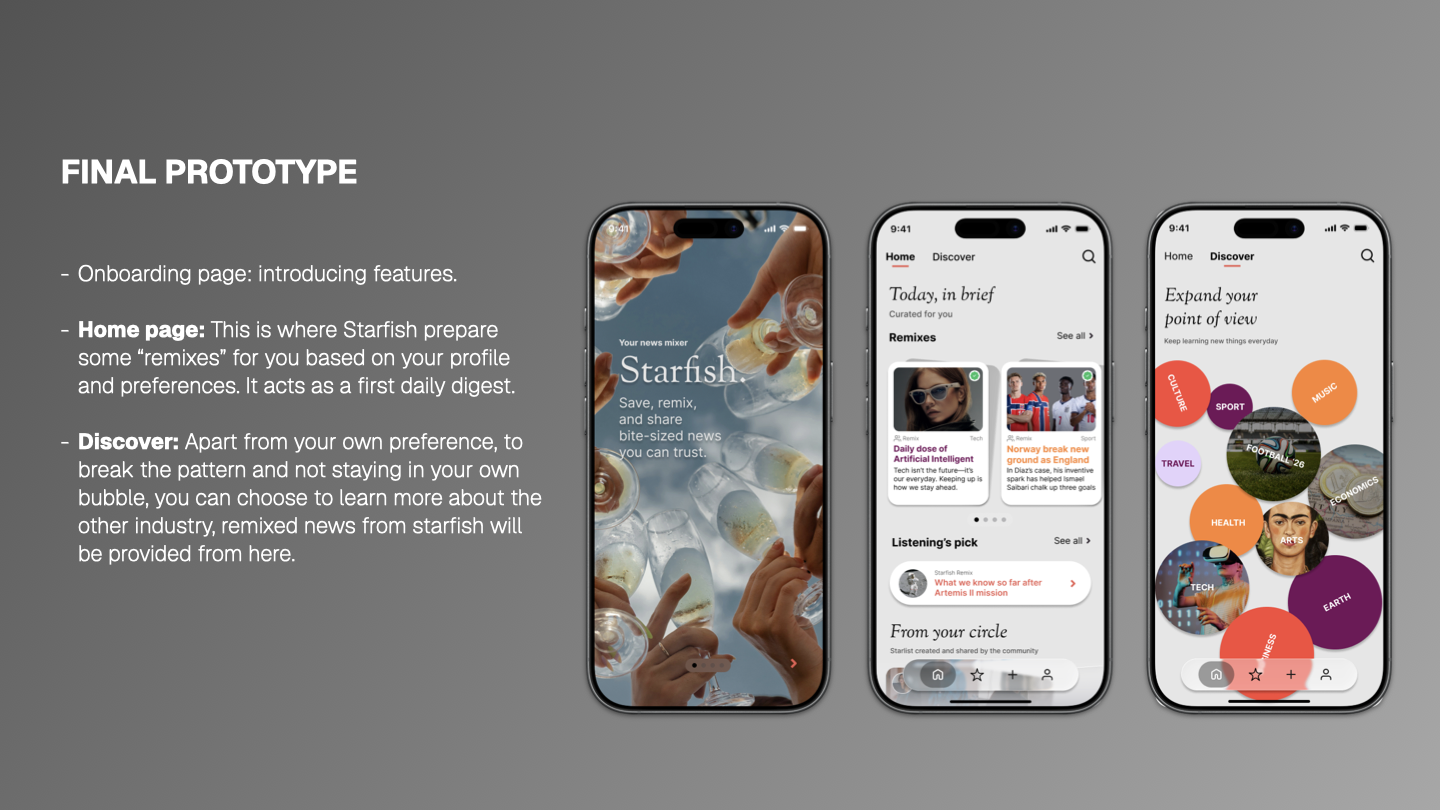
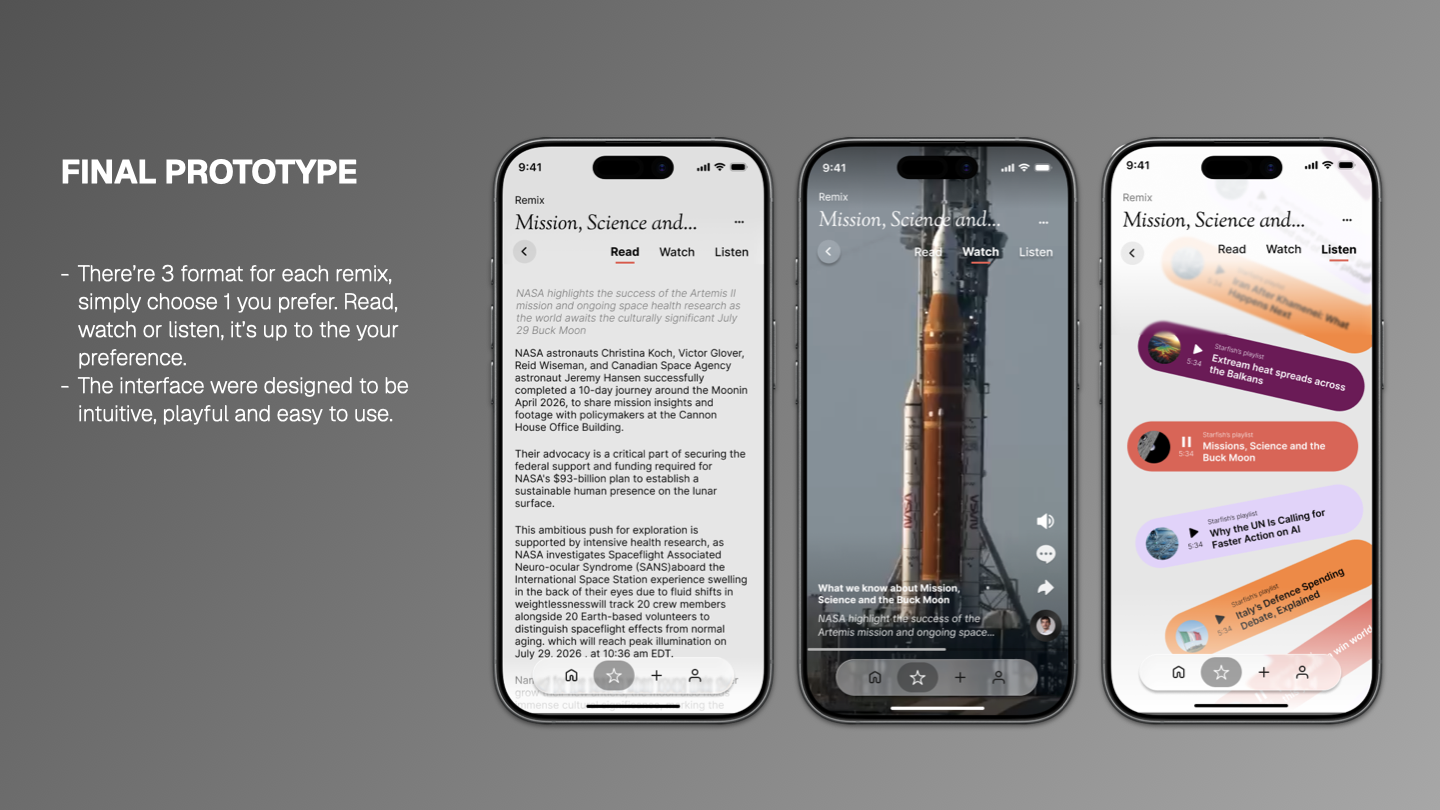
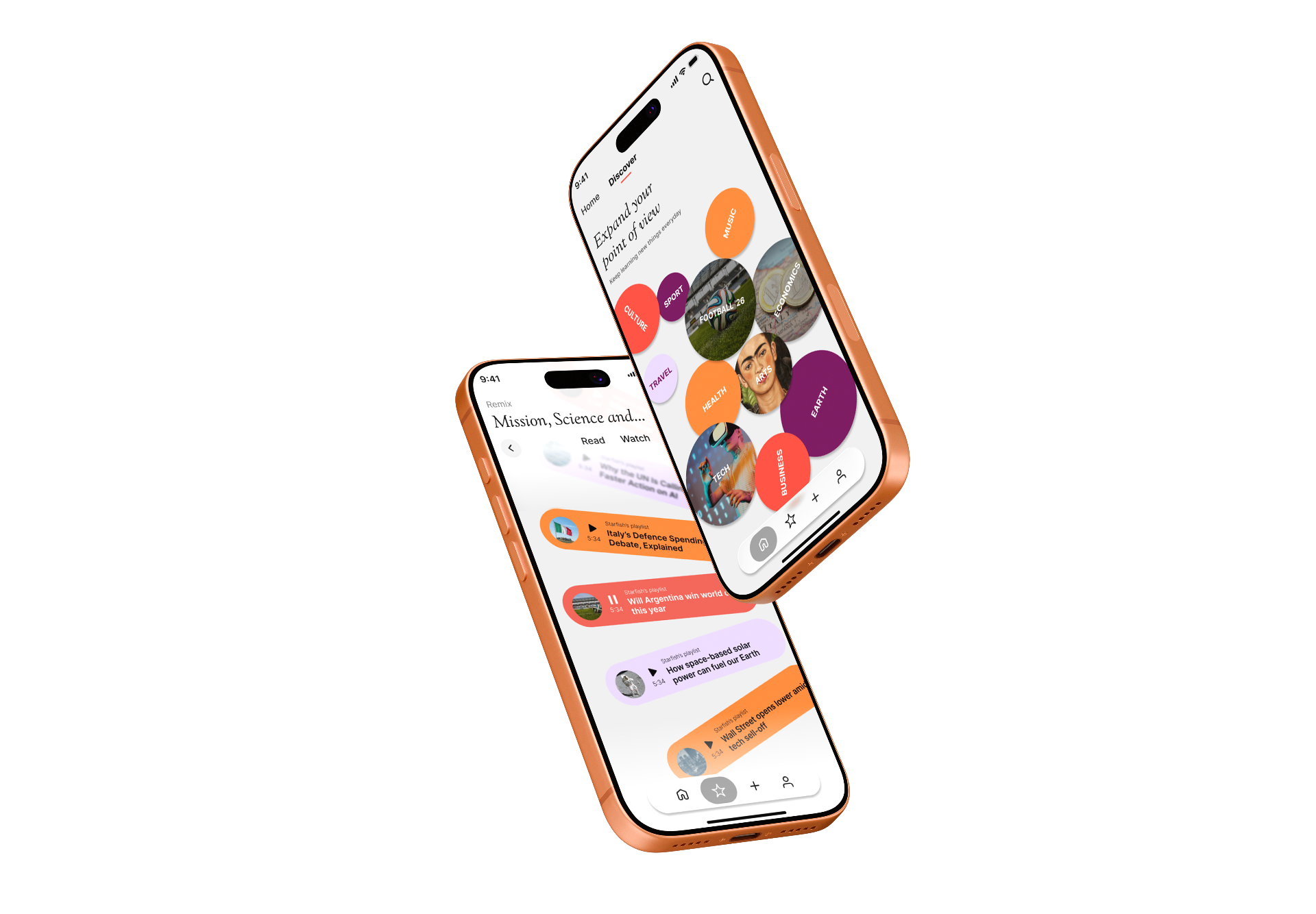
In our final outcome we refined the interface to be more intuitive and personalized. Onboarding and personalization: a homepage that acts as a daily digest based on user preferences. A Discover section designed to break filter bubbles by offering remixed news from various industries. Multi-format consumption: every remix offers three formats — Read, Watch or Listen — allowing users to choose the one that fits their current preference.
Step 07
Future Vision and Takeaways
Looking forward, our goal is to transform news outlets from mere sources into active partners within the app. We intend to continue testing whether the playlist format can permanently shift Gen Z habits from anxious doomscrolling to intentional, smart content consumption.
Challenges
A significant trust gap and emotional overload: 6 out of 8 interviewees were 'passive and avoidant' users who felt no control over the news reaching them. The challenge was to make source verification and multi-format reading feel calm and legible — never like another lecture.
Outcome
A refined mobile prototype with personalized onboarding, a Discover section that breaks filter bubbles, and every remix available in Read, Watch or Listen — validated through eye-tracking and facial-emotion testing.
Reflection
Starfish taught me that information architecture is emotional. The ambition is to turn news outlets into active partners inside the app and to shift Gen Z away from anxious doomscrolling toward intentional, smart consumption.
Next project